Droopy nose tip surgery in Turkey (also called tip plasty, ptotic tip rhinoplasty or nasal tip ptosis correction) is a cartilage-based procedure that lifts, rotates and supports a low or sagging nasal tip, usually under general anesthesia, in about 1.5 to 3 hours.
A droopy (ptotic) nose tip points downward, often makes the nose look longer, and may drop even further when you smile or talk. This page explains why it happens, how it is assessed and corrected, what recovery looks like, what the risks are and what to plan for if you travel to Turkey for surgery. It is written by the team of Op. Dr. Hasan Duygulu in Istanbul for general information; it is not a diagnosis, and only an in-person examination can tell you which technique suits your nose.
Droopy Nose Tip Surgery in Turkey at a Glance
Topic | Typical answer |
What it targets | A low, hooked, bulbous or elongated tip; a tip that drops when smiling; weak tip support |
Technique | Open or closed approach with cartilage reshaping, sutures and, when needed, support grafts |
Anesthesia | Usually general anesthesia |
Surgery time | About 1.5 to 3 hours, depending on technique and grafts |
Hospital stay | Usually same-day discharge or one night |
Splint removal | Around day 5 to 7 |
Back to work or social life | Often 1 to 2 weeks |
Recommended stay in Turkey | About 7 to 10 days |
Final result | Gradual; the tip can keep settling for 6 to 12 months or longer |
These figures are general guides. Healing, technique and timing differ from patient to patient, and no surgeon can guarantee a specific result.
What Is a Droopy Nose Tip?
A droopy nose tip (nasal tip ptosis) is a condition in which the end of the nose points downward or sags below its ideal position. It is often linked with a nasolabial angle (the angle between the nose and the upper lip) of less than 90 degrees. The tip may look hooked, long or heavy, and in some people it also narrows the internal nasal valve and causes mild breathing difficulty.
For many people the problem is mainly cosmetic: the profile looks tired or “beak-like” and the face looks heavier. For others it is also functional, because a collapsing tip can reduce airflow.
Droopy Nose Tip When Smiling: Why Does the Tip Drop?
The tip of the nose often drops when you smile because of a combination of facial muscle movement and weak underlying nasal support. In many people a small paired muscle, the depressor septi nasi, runs from the upper lip into the base of the nasal septum. When you smile, laugh or talk, it contracts and pulls the tip downward.
Three things usually work together:
- Muscle pull. The depressor septi nasi tugs the tip down toward the lip during facial expressions. This is called dynamic tip ptosis.
- Weak or long structures. Soft or elongated lower lateral cartilages and a long caudal septum cannot resist that pull, so the tip dips more than it should.
- Optical contrast. Other smile muscles lift the nostril rims and pull skin closer to the face, which can make a normal tip look lower by comparison.
If the tip also looks low when your face is relaxed, it is called static tip ptosis. Many patients have a mix of both. A surgeon can tell which type you have by watching your face move during a face-to-face examination, and that decides whether the muscle needs to be addressed as well as the cartilage.
What Causes a Droopy Nose Tip?
A drooping tip is rarely caused by one thing. The most common causes are:
- Genetics: An inherited long nasal septum, weak or short lower lateral cartilages, or a naturally acute nasolabial angle.
- Aging: Collagen and elastin decline over time, and the cartilage and connective tissues that hold the tip up gradually weaken.
- Depressor septi nasi muscle: An overactive muscle pulls the tip down every time you smile or speak.
- Trauma: A broken nose or other injury can deform the cartilage or septum and let the tip fall.
- Previous rhinoplasty: If too much tip support was removed, or the support was not rebuilt, the tip can drop over months or years.
- Structural breathing changes: A collapsing tip can narrow the internal nasal valve, which is why some people notice both a droopy look and a blocked feeling.
Knowing the cause matters because it changes the plan: a muscle-driven droop and a support-related droop are not corrected the same way.
How Is a Droopy Nose Tip Evaluated Before Surgery?
A droopy nose tip is evaluated through a combination of physical examination, angle measurements and a check of how the tip moves when you smile. Planning usually includes:
- Nasolabial angle. The angle between a line along the base of the nose and a line along the upper lip. A commonly cited ideal is about 90 to 95 degrees in men and 95 to 105 degrees in women; an angle below that points to a droopy or under-rotated tip.
- Tip rotation and projection. How far the tip projects from the face and how much it is rotated up or down.
- Columella and septum. The length and position of the caudal septum and whether a hanging columella (the tissue between the nostrils) is dragging the tip down.
- Cartilage strength. The shape, size and strength of the lower lateral cartilages and how firmly they attach to the septum.
- Skin thickness. Thick or thin skin changes how much the cartilage framework shows and how it responds to reshaping.
- Dynamic smile test. The surgeon watches you smile and talk to see whether the depressor septi nasi muscle is overactive.
- Facial balance. The nose is judged against the forehead, lips, chin and bridge to decide whether a tip-only procedure is enough or a full rhinoplasty is better.
Photos from the front, side and below, an internal nasal examination and, in many clinics, 3D imaging help you and your surgeon agree on realistic goals before the operation.
Who Is a Good Candidate for Droopy Nose Tip Surgery?
Good candidates for droopy nose tip surgery are people who are bothered by a downward-pointing, hooked or under-rotated tip caused by weak cartilage, aging, genetics, a long septum or an overactive smile muscle. In general, a good candidate:
- is in good physical and mental health, with no condition that could slow healing
- has finished facial and nasal growth (usually after late adolescence)
- has realistic expectations about what the surgery can achieve and how long swelling takes to settle
- does not smoke or use nicotine, or is willing to stop well before and after surgery
- has a specific concern, such as a drooping tip, a tip that drops when smiling, weak tip cartilage, a long caudal septum or breathing difficulty caused by tip collapse
People with only a mild droop sometimes consider non-surgical options such as temporary filler, but fillers cannot fix a major structural or functional problem. Whether you are suitable can only be decided after a medical examination.
Droopy Nose Tip Correction
A drooping nose tip can affect the appearance of the nose and, in some cases, breathing. It is corrected surgically with rhinoplasty, which lifts, rotates and supports the tip to create a lasting structural change. The approach depends on how severe the droop is, whether it is static or dynamic (worse when smiling) and what you want from the result.
Techniques Used to Lift a Droopy Nose Tip
The exact method depends on your anatomy. In surgical correction, the goal is permanent structural elevation and tip rotation, which increases the angle between the nose and the upper lip. Commonly used techniques include:
- Tongue-in-groove technique: The lower lateral cartilages are repositioned and secured to the lower edge of the septum to lock the tip in a stable, elevated position.
- Septal extension graft: Used when the natural septum is too short to anchor the tip; a cartilage graft acts as an extension that supports and lifts the tip.
- Columellar strut graft: A piece of cartilage placed between the tip cartilages to reinforce and project the columella and stop the tip from dropping.
- Suture techniques: Dome-binding and re-orienting sutures reshape and rotate the lower lateral cartilages upward without removing large amounts of tissue.
- Cephalic trimming: A conservative strip of upper-margin cartilage is removed to reduce weight and let the tip rotate more easily.
- Septal shortening: If an elongated caudal septum is helping to push the tip down, its edge is carefully shortened.
- Depressor septi nasi release: When the tip drops severely while talking or smiling, the muscle can be released, weakened or repositioned.
- Cartilage grafts: Cartilage from the septum, ear or rib is used when extra support is needed, which is especially common in revision cases.
Most patients need a combination of these steps rather than a single one. Results and suitability vary from person to person.
How Is Droopy Nose Tip Surgery Performed?
Droopy nose tip surgery is performed through an open or closed rhinoplasty approach to reshape, lift and structurally support the lower nasal cartilages. It is usually done under general anesthesia in an accredited hospital, and it is tailored to each patient’s anatomy and wishes.
A typical operation follows these steps:
- Approach. Small incisions are made inside the nostrils (closed) or inside the nostrils plus a tiny incision across the columella (open).
- Cartilage and septum modification. If needed, excess tip cartilage is conservatively trimmed, the tip cartilages are repositioned and rotated upward, and an overly long caudal septum is shortened.
- Support. A columellar strut or septal extension graft, often made from the patient’s own septal, ear or rib cartilage, is placed to hold the new position. Internal sutures refine the shape and lock the rotation in place.
- Smile dynamics. If the tip drops mainly when you smile, the depressor septi nasi muscle can be released, weakened or modified so that the pull is reduced while the smile stays natural.
- Closure and support. The incisions are closed and a small splint or tape is placed on the nose.
Open or Closed Rhinoplasty for a Droopy Nose Tip?
Both open and closed rhinoplasty can correct a droopy nose tip, and the right choice depends on your anatomy and on how complex the surgery needs to be.
| Feature | Open rhinoplasty | Closed rhinoplasty |
|---|---|---|
| Incisions | Inside the nostrils plus a small incision on the columella | Entirely inside the nostrils |
| Best suited for | Moderate to severe drooping, grafts, tip asymmetry, revision surgery | Mild to moderate droopiness, septal shortening, a basic cephalic trim, muscle release |
| Advantages | Direct view and precise control; easier placement of sutures and grafts | No external scar; often slightly less early swelling and a shorter operation in simple cases |
| Limitations | A tiny external scar that usually fades; swelling and numbness may last a little longer | Less visibility and working space, so it is less ideal for complex tip reconstruction |
Open rhinoplasty is often preferred when the tip needs grafts, but many board-certified surgeons have a strong personal technique preference, and a surgeon experienced in closed surgery can treat many droopy tips without an external scar. The decision belongs to you and your surgeon after examination.
How Long Does Droopy Nose Tip Surgery Take?
Tip-focused rhinoplasty usually takes about 1.5 to 3 hours, depending on the technique and whether grafts are needed. Rib cartilage harvesting or revision work can lengthen the operation. Many patients go home the same day or after one night in hospital, and your surgeon will give you a personal estimate.
[Surgeon’s note to add: Op. Dr. Hasan Duygulu’s own approach to droopy tips: which techniques he prefers, how he decides between open and closed, how often he treats the depressor muscle, and what he sees most in his patients.]
Before Droopy Nose Tip Surgery: Preparation Tips
Preparing for droopy nose tip surgery involves physical, lifestyle and logistical steps that help the procedure and recovery go safely. Always follow your own surgeon’s instructions, which take priority over any general list.
In the weeks before surgery
- Describe your health history, allergies and current medications clearly, and explain the nose shape you want.
- Stop smoking, vaping and all nicotine products, ideally at least 2 to 4 weeks before surgery, because nicotine restricts blood flow and slows healing.
- Avoid aspirin, ibuprofen, vitamin E, fish oil and certain herbal supplements if your surgeon tells you to, since they can increase bleeding and bruising. Do not stop or change any prescribed medication on your own, and ask your doctor first, especially about blood thinners.
- Limit or avoid alcohol, which can increase bruising and swelling.
- Have the blood tests and other checks your surgeon requests.
- Arrange prescriptions and recovery supplies in advance: cold compresses, extra pillows, soft foods and saline spray.
The day before and the morning of surgery
- Follow your surgeon’s fasting instructions exactly. They will tell you how long to go without food and drink.
- Arrive with a clean, bare face, with no makeup, lotion or skincare products.
- Wear loose clothing that buttons or zips at the front so nothing has to be pulled over your head.
- Leave jewelry, piercings and valuables at the hotel, and ask a companion to stay with you for the first 24 to 48 hours.
After Droopy Nose Tip Surgery: Aftercare Tips
After surgery, rest and careful aftercare protect the new tip position while it heals. Your surgeon’s instructions come first. In general:
- Rest and elevate. Rest for the first few days, and sleep on your back with your head raised on two or three pillows to reduce swelling.
- Cold compresses. Use them gently around the eyes and cheeks as advised, without pressing on the nose and without placing ice directly on the skin.
- Keep the splint and dressings in place. Protect the nose from knocks, and keep the area clean as directed. Change drip pads under the nose if there is light bloody drainage.
- Do not blow your nose. Avoid it for at least 7 to 10 days, and sneeze with your mouth open. Saline spray helps keep the passages moist.
- Take medication as prescribed. Painkillers and antibiotics, if prescribed, support comfort and lower the risk of infection.
- Limit activity. Avoid heavy lifting, bending and straining in the first week, and avoid strenuous exercise for about 2 to 3 weeks (longer for contact sports) unless your surgeon says otherwise.
- Protect the nose from pressure and sun. Keep glasses and sunglasses off the bridge for about 4 to 6 weeks unless cleared, and protect the nose from the sun.
- Avoid nicotine, alcohol and blood thinners. They impair blood flow and slow tissue repair, so stay away from them for at least 2 to 3 weeks or as advised.
Droopy Nose Tip Recovery Timeline
Recovery from droopy nose tip surgery follows a structured timeline, but the nasal tip typically takes the longest to heal and settle into its final position, often 12 months or more. The table below is a general guide; healing differs for everyone.
When | What to expect |
Day 1 to week 1 | A splint or tape stays on for about 5 to 7 days. Swelling and bruising are strongest around the tip, eyes and cheeks. The tip can look higher or more projected than expected at first because of swelling. Splint and stitches are usually removed around day 7. |
Weeks 2 to 4 | Bruising fades and most people return to office work or school after about 7 to 14 days. Roughly a quarter to a third of the swelling subsides. Avoid strenuous exercise and keep glasses off the bridge. |
Weeks 5 to 6 | A large share of the swelling, often around half or more, has resolved. Light cardio may resume if your surgeon agrees; contact sports stay restricted for 6 to 12 weeks. |
Months 3 to 6 | Most visible swelling has settled, commonly cited as 80 to 90 percent. The supported tip naturally relaxes slightly as skin and internal tissues settle. |
Months 12 to 18 | Subtle tip swelling resolves completely and the final contour becomes apparent. Thick skin and revision surgery can take longer. |
Tip settling versus a true droop. A small natural settling of the tip, around 1 to 1.5 mm, is normal as healing progresses. A significant or progressive drop that appears later can mean the internal support needs to be re-evaluated by your surgeon.
What can prolong swelling. Thick skin, previous nasal surgery and nicotine use can all lengthen the time the tip takes to define.
When to Call Your Doctor After Droopy Nose Tip Surgery
Contact your surgeon promptly if you have:
- heavy or persistent bleeding
- fever or signs of infection such as spreading redness, warmth, or pus
- severe or worsening pain that medication does not control
- difficulty breathing
- a sudden, noticeable change in the shape of the tip
If you have returned home, contact the clinic first and keep your photos and discharge notes ready; your clinic should explain in advance how follow-up care works after you leave Turkey.
Risks of Droopy Nose Tip Surgery
Like any surgery, droopy nose tip surgery carries general and nose-specific risks. Choosing a qualified, experienced surgeon and following aftercare instructions reduces these risks but does not remove them.
General surgical and anesthesia risks
- Reactions to general anesthesia
- Bleeding or blood collecting under the skin (hematoma)
- Infection
- Visible or asymmetric scarring
Risks specific to the nose and tip
- Recurrent drooping or loss of support: If internal support is inadequate or weakens, the tip can sag again over time, sometimes needing revision surgery.
- Asymmetry or contour irregularities: Uneven healing or shifting grafts can create a lopsided or irregular tip.
- Breathing difficulty: Changes to the nasal valve or internal structure can temporarily or, rarely, permanently reduce airflow.
- Numbness or altered sensation: Nerve changes in the nose or upper lip are usually temporary but can occasionally last.
- Over-correction: Excessive rotation or too much cartilage removal can leave an overly upturned or pinched tip.
- Skin problems: In rare cases, reduced blood supply can cause skin thinning, discoloration or necrosis.
- Graft problems: If cartilage or implants are used, there is a risk of displacement, resorption or extrusion.
- Under-correction and revision: The result may not match expectations, and some patients need further surgery.
Ask your surgeon how these risks apply to you, how often revisions are needed in their practice and what happens if a complication occurs.
How Long Should You Stay in Turkey After Droopy Nose Tip Surgery?
Plan to stay in Turkey for about 7 to 10 days after droopy nose tip surgery. This lets your surgeon remove the splint and stitches around day 7, check healing and clear you to fly home. A typical stay looks like this:
Day | What usually happens |
Day 1 to 2 | Surgery and observation in the hospital or clinic for early swelling, bleeding and discomfort |
Day 3 to 4 | Removal of internal supports or silicone splints, if used |
Day 5 to 7 | Final follow-up: external splint, tapes or stitches removed and medical clearance given |
Day 7 to 10 | Safe window for international travel once your surgeon confirms healing is on track |
Staying the full week matters for three reasons: splint and stitch removal should be done in person before you fly, flying too early can increase swelling and nasal congestion because of cabin pressure changes, and your surgeon can catch and treat early signs of infection, bleeding or asymmetry right away. If your flight home is long, or if you are having revision surgery, your surgeon may advise a longer stay. Ask your clinic how follow-up care and complications would be handled after you return to your country.
Droopy Nose Tip Surgery Cost in Turkey
The cost of droopy type nose surgery in Turkey varies depending on many factors. The cost is determined according to the hospital where the surgery will be performed, the location of the hospital, the surgeon who will perform the surgery, and the scope of the surgery.
What Affects Droopy Nose Tip Surgery Cost in Turkey?
Surgeon experience, hospital quality, use of cartilage grafts (especially rib cartilage), revision vs. primary surgery, and package inclusions (accommodation, transfers, medication, check-ups) all change the final cost. Ask what is included in writing. Because every nose is different, a personal quote can only be given after your surgeon examines you.
You can visit our “rhinoplasty before and after photos” page to examine people who have had previous rhinoplasty surgery.
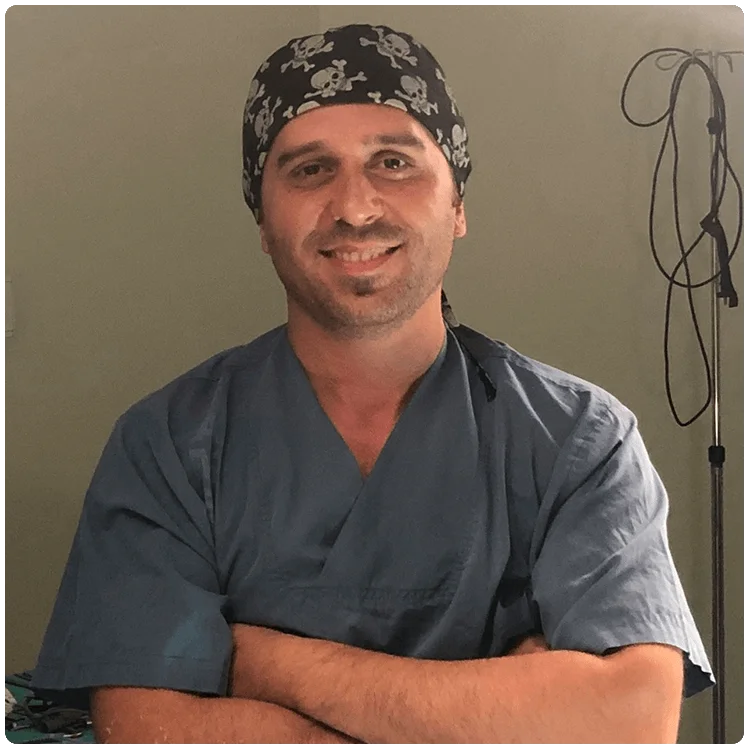
Op. Dr. Hasan Duygulu
Istanbul, Türkiye
Op. Dr. Hasan Duygulu
Born in Turkey, Dr. Hasan Duygulu graduated from Dokuz Eylül University Faculty of Medicine in 2009 and specialized in Ear, Nose and Throat (ENT) Diseases and Head & Neck Surgery. Throughout his career, he has focused on facial aesthetic and reconstructive surgery, with particular expertise in rhinoplasty, septoplasty, otoplasty and facelift. He holds double board certification in facial plastic and reconstructive surgery (EBCFPRS and IBCFPRS). His practice is built on detailed facial evaluation and personalized surgical planning, so that every result looks natural and respects the unique character of each patient’s face.
Dr. Hasan Duygulu’s training did not end with his specialty. He has attended advanced rhinoplasty courses and live surgery workshops across Europe, and in 2016 he took part in deep-plane facelift cadaver dissection courses, which keeps his methods aligned with current scientific literature.
With more than 15 years of experience and over 6,000 operations across rhinoplasty, septoplasty, otoplasty and facelift surgery, he has treated patients from more than 30 countries.
Every patient has a detailed one-on-one consultation, and Dr. Hasan Duygulu personally performs every stage of the surgery, from planning to the final follow-up visit.
Dr. Hasan Duygulu’s approach to droopy nose tip surgery
Indicated when the nasal tip points downward, makes the nose look longer or drops further when smiling or with age, droopy nose tip surgery lifts and supports the tip into a better position. Dr. Hasan Duygulu, one of the leading droopy nose tip surgery specialists in Turkey, creates a more balanced and open profile while keeping the natural character of your nose. As an ENT surgeon, he also makes sure that the new tip position and support do not compromise your breathing.
Droopy Nose Tip Surgery in Turkey: Frequently Asked Questions
Can a droopy nose tip be fixed without surgery?
Non-surgical options such as filler may lift the tip slightly in some people, but results are temporary. Permanent correction of structural tip ptosis generally requires surgery. Your doctor can advise which option suits you.
Will my nose tip still droop when I smile after surgery?
If the smile-related drop is caused by the depressor septi nasi muscle, it can be addressed during surgery. Outcomes vary between patients.
Is droopy nose tip surgery painful?
It is done under general anesthesia. Afterwards, most patients describe pressure and congestion more than sharp pain, and pain medication is prescribed as needed.
Can droopy tip surgery improve breathing?
When the drooping tip or septum affects airflow, correcting them can improve breathing, though this depends on the individual cause.
How long do droopy nose tip surgery results last?
Results are generally long-lasting, but natural aging and individual healing can change the nose over time.
Is Turkey a good place for droopy nose tip surgery?
Turkey has many experienced rhinoplasty surgeons, but quality varies. Check the surgeon’s credentials, hospital licensing, before-and-after photos and patient follow-up policy before deciding.