
Chin Aesthetics in Turkey
Opr. Dr. Hasan Duygulu
Chin aesthetics, also known as mentoplasty or genioplasty, refers to procedures that refine the shape, size and projection of the chin to improve facial balance and profile. Depending on your anatomy, this can mean a chin implant, a bone procedure (sliding genioplasty or chin reduction) or a non-surgical option. At his Istanbul clinic, Dr. Hasan Duygulu plans every chin procedure individually, in harmony with your nose, lips and jawline. If you are considering chin aesthetics in Turkey, our team will guide you from your first online consultation to your final follow-up.
What Is Chin Aesthetics (Mentoplasty / Genioplasty)?
The chin is one of the main points that define the profile of the face. A chin that is small or set back (retrusive, medically called microgenia), too long, too prominent or too wide (macrogenia), or asymmetrical can change how the nose, lips and jawline look, and it can make the lower face look less balanced. Chin aesthetics, medically known as mentoplasty or genioplasty, includes surgical and non-surgical procedures that change the projection, height or width of the chin to create a more harmonious profile.
Chin aesthetics can improve concerns such as:
- A small or receding chin that makes the nose look larger or the profile look weak
- A chin that is too long, too prominent or too wide for the rest of the face
- Asymmetry of the chin
- A lack of definition between the chin, the jawline and the neck
- Fullness under the chin that blurs the lower face outline, in suitable patients
The aim goes beyond changing the size of the chin. The chin is planned to fit the nose, jawline and the other features of the face, which is why it is often evaluated together with them. When the nose and the chin are planned together, this approach is sometimes called profiloplasty.
Chin aesthetics focuses on the chin. It does not correct problems with the bite or the position of the jaws, which may need orthodontic or jaw surgery, and it does not tighten loose neck skin. The goal is a balanced, natural profile, not a chin that looks added or out of proportion.
Why Choose Turkey for Chin Aesthetics?
Turkey is one of the most frequently preferred destinations for international patients seeking facial aesthetic surgery. Patients who research chin aesthetics in Turkey or chin surgery in Istanbul usually mention the following reasons:
- Experienced surgeons: Many surgeons in Turkey treat patients from abroad regularly and take part in international medical communities.
- Modern hospitals: Procedures are performed in hospital settings that follow established clinical protocols.
- Cost advantage: Chin aesthetics prices in Turkey are generally lower than in many Western countries, largely because of different operating costs and exchange rates.
- Coordinated patient journey: Airport transfers, accommodation support, interpreters and follow-up can be organized for you.
- Shorter waiting times: Consultations and surgery can usually be scheduled promptly.
- Istanbul as a destination: Surgical chin procedures require a stay of about 5–7 days, and many patients combine recovery with time in one of the world’s most culturally rich cities.
Choosing a destination should never be based on price alone. The surgeon’s qualifications, the hospital’s standards and the quality of follow-up care matter far more.
Why Patients Choose Dr. Duygulu for Chin Aesthetics in Istanbul
- Surgeon-led care from the first consultation to the final follow-up
- Individual planning for each face, based on the balance between the chin, nose, lips and jawline
- A natural-result philosophy that avoids an over-projected or “added” chin
- Honest advice on which option suits you, including non-surgical choices
- Extensive experience in facial and head & neck anatomy
- A 24/7 accessible patient coordination team for international patients
- Verified patient reviews on Google, RealSelf, Flymedi and Instagram
- A central clinic in Harbiye / Nişantaşı, Istanbul
Who Is a Good Candidate for Chin Aesthetics?
Chin aesthetics may be suitable if you:
- Notice a visible imbalance in your facial profile because of the size or projection of your chin
- Feel that your chin looks small, set back, too long, too prominent or uneven
- Have a nose or lips that look out of balance because of the chin position
- Are an adult whose facial growth is complete
- Have enough bone structure for the technique being considered, such as a bone procedure
- Are in good general health, with no uncontrolled medical conditions
- Do not smoke, or are willing to stop at least 4 weeks before and after surgery
- Have good oral and dental health
- Have realistic expectations: a more balanced profile, not perfection or a different face
- Are making the decision for yourself rather than under outside pressure
There is no single ideal age, and the right plan depends on your anatomy, not your age alone. Candidacy is often linked to the wish for overall facial harmony rather than an isolated chin concern, so it can only be confirmed through a consultation in which your chin, jaw position, bite, nose, lips, medical history and goals are assessed together, often with side-view photographs or imaging.
Who May Not Be a Good Candidate?
Chin aesthetics may need to be postponed or may not be recommended if you:
- Are still growing
- Smoke and are unwilling to stop
- Have uncontrolled diabetes, high blood pressure, a bleeding disorder or other uncontrolled medical conditions
- Take blood-thinning medication that cannot be safely paused
- Have active dental or gum infections, or an active infection or skin condition in the area
- Have a significant bite problem or jaw alignment problem that needs orthodontic or jaw (orthognathic) surgery rather than a chin procedure, and may need a different specialist such as an orthodontist or a maxillofacial surgeon
- Have only minor chin concerns that could be addressed with a less invasive option
- Have unrealistic expectations or want a specific chin shape that is not anatomically achievable
- Have a main concern that comes from the neck, jowls or skin laxity rather than the chin itself
Your surgeon will give honest advice on whether a chin procedure is right for you, even when the answer is a different treatment.
Chin Aesthetics Techniques in Turkey
The technique is chosen after examination, not before. It depends on your bone structure, skin quality, the balance of your face and your goals. These are the approaches most commonly discussed by patients researching chin aesthetics in Turkey.
Chin Implant (Chin Augmentation)
A medical-grade implant, such as silicone or Medpor (doktor onayı gerekli, kullanılan malzemeyi yazın), is placed over the chin bone to increase projection and definition. The incision can be made inside the mouth, along the gum line (intraoral), or in the natural crease under the chin (submental). Material safety and how well the implant fits and stays in place are important. It is suitable for a small or receding chin when the bone itself is in a good position.
Sliding Genioplasty (Bone Procedure)
In this more intricate technique, the chin bone is cut (an osteotomy) and moved forward, backward, up or down, then fixed in its new position with small plates or screws. It uses your own bone, and it is often considered for larger changes in projection, changes in chin height or asymmetry, or when an implant is not suitable.
Chin Reduction (Bone Shaving)
For a chin that is too prominent, too long or too wide, the bone can be reshaped by carefully shaving or removing part of it, or by a bone procedure, to bring the chin into balance with the rest of the face and create a softer look.
Non-Surgical Chin Filler
An injectable filler, such as hyaluronic acid, can add projection or definition without surgery. The effect is temporary and subtle, so it is suited to mild concerns, to patients who prefer a non-permanent option or to those who want to “test” a new profile before a surgical decision.
Fat Grafting (Fat Injection) to the Chin
Fat taken from another part of your body is injected into the chin area to add soft volume. It suits subtle changes in shape and is sometimes done together with other procedures.
Chin with Submental Liposuction
When fullness under the chin blurs the lower face outline, fat removal can be combined with a chin procedure for a clearer chin-neck angle and profile.
Dr. Duygulu will explain which technique he recommends for your chin and why, as well as the alternatives.
What Happens During a Chin Procedure?
Surgical chin procedures are performed in a hospital setting, usually under general anesthesia, although minor procedures may be done with local anesthesia and sedation, depending on the technique and any combined procedures. The operation commonly takes about 1 to 3 hours, depending on the technique and complexity.
For a chin implant, the incision is made either inside the mouth along the gum line or in a natural crease under the chin. A pocket is created over the chin bone, and the selected implant is placed and, when needed, secured so that it stays in the right position.
For a sliding genioplasty, the incision is usually made inside the mouth to reach the bone. The chin bone is cut carefully, moved to the planned position and fixed with small plates and screws, taking care to protect the nerve that supplies the lower lip and chin.
For a chin reduction, the excess bone is carefully shaved or reshaped to reach the planned contour.
The incisions are then closed in layers with fine sutures. After surgery, a dressing, tape or support garment is applied to support the new contour and limit swelling. A small drain is rarely needed. Most patients go home the same day or after one night. Non-surgical chin filler is performed in a clinic visit and takes much less time.
Chin Aesthetics and Related Facial Procedures
Jowl liposuction is often planned together with treatments for the neck, chin and lower face to create a sharper, more balanced contour. Dr. Hasan Duygulu evaluates your facial structure and recommends only the treatments that suit your goals.
Jowl Liposuction
Removes excess fat along the jawline and jowl area to create a sharper lower-face contour. It works best for patients with good skin elasticity and localised fullness.
Neck Lift
Tightens loose neck skin and softens visible bands to create a smoother, more defined neck. It is often chosen to restore a sharper line between the jaw and the neck.
Bichectomy
Removes the buccal fat pads in the lower cheeks to create a slimmer, more sculpted face. It suits patients who want more defined cheek contours.
Neck Lift
Tightens loose neck skin and softens visible bands to create a smoother, more defined neck. It is often chosen to restore a sharper line between the jaw and the neck.
Your Chin Aesthetics Journey with Dr. Duygulu
- Consultation Request
Send your request via WhatsApp, email or the website form, along with clear photos of your face from the front, both profiles (a true side view is especially important) and three-quarter views. Our coordinator replies within 24 hours.
- Online Consultation with Dr. Duygulu
You discuss your goals, medical history, dental history, medications and previous procedures. The surgeon gives a preliminary assessment and discusses which options may suit you. A final decision is made only after an in-person examination.
- Pre-Operative Planning
You receive written instructions on medications, supplements, smoking, alcohol and oral hygiene. Our team helps with travel and accommodation planning.
- Arrival & In-Person Assessment
You are met at the airport. Before the procedure, you have an examination of your chin, jaw, bite and facial proportions, any required tests or imaging and a final consultation with your surgeon.
- Procedure Day
The procedure takes place with the technique and anesthesia agreed during your consultation.
- Early Recovery & First Check
Dr. Duygulu reviews your healing in the first days, and dressings and sutures are managed as planned before you travel home.
- Long-Term Follow-Up
We stay in contact after you return home, with photo-based check-ins as agreed with your surgeon.
Things To Do Before and After Chin Aesthetics
Before the procedure
- Share your full medical history, allergies, dental history and current medications
- Have any dental or gum problems treated beforehand, and keep your mouth clean
- Stop smoking and nicotine products at least 4 weeks before surgery
- Avoid alcohol in the weeks leading up to surgery as advised
- Ask your surgeon which medications and supplements to stop, such as aspirin, ibuprofen, vitamin E, fish oil and herbal products. Never stop prescribed medication without medical advice.
- Follow fasting instructions if you will have sedation or general anesthesia
- Arrange a companion for the first days
After the procedure
- Keep your head elevated, including during sleep, for the first days
- Follow your surgeon’s instructions on dressings, tape or the support garment, wound care and medications
- If the incision is inside the mouth, keep your mouth clean and use any prescribed mouth rinse as directed
- Eat soft foods at first and avoid hard, hot or spicy foods as advised
- Limit talking, wide yawning and chewing hard foods in the first days, so the chin can settle
- Apply cold compresses as advised to limit swelling
- Avoid strenuous exercise and any pressure or impact to the chin for as long as advised
- Do not smoke during recovery
- Attend all follow-up appointments
- Contact your surgeon immediately if you notice severe or one-sided swelling, increasing pain, fever, pus, bleeding, a feeling that the implant has shifted or any other concern
Chin Aesthetics Recovery Timeline
Healing varies from person to person and depends on the technique, whether an implant, a sliding genioplasty or a filler is used. This is a general guide for surgical procedures:
- Days 1–3: Swelling, tightness and bruising around the chin and lower face are expected. A soft diet is usually advised. Discomfort is managed with prescribed medication.
- Days 4–10: Swelling and bruising begin to fade. Sutures are removed or dissolve as planned, and many patients return to desk work after 7–10 days.
- Weeks 2–4: Most significant swelling and bruising subside, and most patients feel comfortable returning to social activity. Physically demanding work may need 2–3 weeks.
- Weeks 4–6: Swelling continues to settle. Light exercise is typically reintroduced gradually, and bone healing continues if a genioplasty was performed.
- Months 3–6: Most swelling resolves, tissues settle and the final contour becomes clear. Numbness or tingling of the chin and lower lip may take several months to improve.
Flying Home After Chin Aesthetics
Recovery from a surgical chin procedure in Turkey starts in Istanbul, so plan to stay for about 5–7 days. This allows early check-ups and suture management before the journey home. Long flights slightly raise the risk of blood clots and can make swelling more noticeable, so your surgeon will confirm when it is safe to fly. Share your travel plans early so your return date can be arranged around your recovery.
Risks and Possible Complications
Every procedure carries risks. Chin aesthetics is an elective procedure, so it is important to understand them before deciding. Possible risks include:
- Swelling and bruising, which are expected but may last longer in some patients
- Bleeding or hematoma (a collection of blood), or a collection of fluid
- Infection, which in rare cases can involve an implant and may require its removal
- Temporary or, rarely, permanent numbness, tingling or weakness of the chin and lower lip due to the mental nerve
- Asymmetry or a result that does not look balanced
- Shifting or displacement of an implant, or an implant that can be felt or seen
- Bone changes under an implant over time
- Problems with bone healing or fixation after a genioplasty
- Injury to the roots of the lower teeth, which is uncommon
- Visible scars if the incision is made under the chin
- Results that do not match your expectations, which may require a revision procedure
- Risks related to anesthesia and blood clots, which are particularly relevant when traveling by air
For non-surgical fillers, risks include bruising, swelling, lumps, and, rarely, serious complications if filler enters a blood vessel.
Dr. Duygulu will review these risks with you in detail during your consultation. Choosing a qualified surgeon, disclosing your full medical history, keeping your mouth clean and following aftercare instructions all help lower the risk.
How Long Do Chin Aesthetics Results Last?
The result of a chin implant or a genioplasty is long-lasting, because the change is structural. However, the face continues to age, the soft tissues around the chin change with time, and weight gain or loss can alter how the profile looks. Chin implants are not guaranteed to last for life, and some patients later choose to have them adjusted or removed. Non-surgical chin filler is temporary and usually needs repeating, and the time it lasts varies between patients. A stable weight, good skincare and sun protection support a lasting result.
How to Choose a Chin Aesthetics Surgeon in Turkey
Selecting the right surgeon matters more than the destination. Before booking chin aesthetics in Turkey, check:
- Qualifications: The surgeon’s specialty, training and experience in facial surgery. Verify credentials through official medical associations rather than relying on clinic websites alone.
- Facility: That the procedure takes place in a licensed hospital with appropriate anesthesia and emergency capability.
- Personal involvement: Whether the surgeon personally performs the procedure and follows your recovery.
- Honest advice: Whether the surgeon explains the options, including non-surgical ones, rather than offering the same procedure to everyone.
- Profile planning: Whether your plan is based on side-view photographs or imaging and on the balance with your nose and lips.
- Materials: What implant or material will be used, and why it was chosen for you.
- Real results: Before and after photos of the surgeon’s own patients, with consent, and independent reviews.
- Transparent planning: A written plan that explains the technique, risks, follow-up and what the quote includes.
- Aftercare: How you can reach the team after you return home.
Be cautious of any offer that promises guaranteed results or quotes a fixed price without reviewing your photos and medical history.
What Determines the Cost of Chin Aesthetics in Turkey?
Chin aesthetics cost in Turkey depends on your individual plan, which is why a reliable quote is only possible after reviewing your photos and medical history. The main factors are:
- The technique used (implant, sliding genioplasty, chin reduction, filler or fat grafting)
- The type of implant or material, when one is used
- Whether it is combined with other procedures, such as rhinoplasty or neck contouring
- The surgeon’s experience
- Hospital and operating room standards
- Anesthesia type and duration
- Pre-operative tests or imaging
- Post-operative care, including follow-up visits, dressings and medications
- Additional services such as transfers, accommodation and interpreter support
Chin aesthetics prices in Turkey are generally lower than in many Western countries, but the lowest price is not a sign of the best value. For a personalized quote, contact our team with your photos and questions.
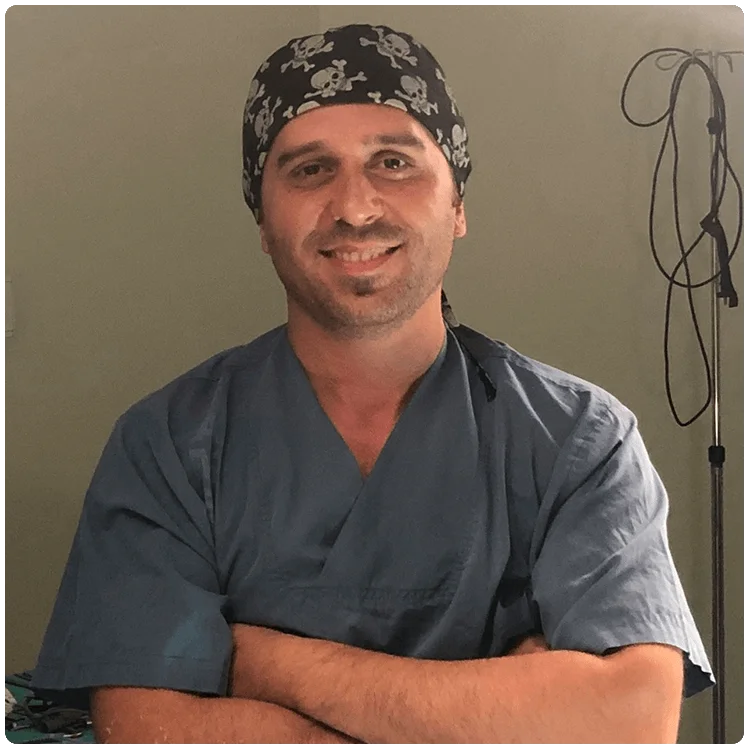
Op. Dr. Hasan Duygulu
Istanbul, Türkiye
Op. Dr. Hasan Duygulu
Born in Turkey, Dr. Hasan Duygulu graduated from Dokuz Eylül University Faculty of Medicine in 2009 and specialized in Ear, Nose and Throat (ENT) Diseases and Head & Neck Surgery. Throughout his career, he has focused on facial aesthetic and reconstructive surgery, with particular expertise in rhinoplasty, septoplasty, otoplasty and facelift. He holds double board certification in facial plastic and reconstructive surgery (EBCFPRS and IBCFPRS). His practice is built on detailed facial evaluation and personalized surgical planning, so that every result looks natural and respects the unique character of each patient’s face.
Dr. Hasan Duygulu’s training did not end with his specialty. He has attended advanced rhinoplasty courses and live surgery workshops across Europe, and in 2016 he took part in deep-plane facelift cadaver dissection courses, which keeps his methods aligned with current scientific literature.
With more than 15 years of experience and over 6,000 operations across rhinoplasty, septoplasty, otoplasty and facelift surgery, he has treated patients from more than 30 countries.
Every patient has a detailed one-on-one consultation, and Dr. Hasan Duygulu personally performs every stage of the surgery, from planning to the final follow-up visit.
Dr. Hasan Duygulu’s approach to chin aesthetics
Suited to patients whose chin is small, recessed or out of balance with the nose and the jawline, chin aesthetics refines the shape and projection of the chin to improve facial balance and profile. Dr. Hasan Duygulu, one of the leading chin aesthetics specialists in Turkey, evaluates the chin from the front and in profile, in relation to your nose, lips and jawline, and plans the change in harmony with them; for example, a small chin can make the nose look larger, while a balanced chin can improve the whole profile. He explains the options that suit your face during the consultation. The aim is a harmonious profile.
Ask Our Experts!
You can fill out the form to get answers to all your questions and detailed information about treatments.
Frequently Asked Questions
Is chin aesthetics in Turkey safe?
Chin aesthetics includes surgical procedures, and their safety depends on the surgeon’s qualifications, the hospital’s standards, your health and your aftercare, not on the country. Because the chin lies close to the nerve that supplies the lower lip, the surgeon’s knowledge of facial anatomy is especially important. Check your surgeon’s credentials, confirm the procedure takes place in a licensed hospital, and plan enough time for follow-up before flying home.
How much does chin aesthetics cost in Turkey?
The price depends on the technique, any combined procedures, the hospital and the length of your stay. A personalized quote is given after your photos and medical history are reviewed. Contact us for details.
How long should I stay in Turkey after a chin procedure?
For a surgical chin procedure, plan for about 5–7 days. This covers the procedure, the early check-ups and suture management. Your surgeon will confirm when it is safe to fly. A non-surgical chin filler needs much less time.
How long does a chin procedure take?
Surgical chin procedures commonly take about 1 to 3 hours, depending on the technique and any combined procedures. A non-surgical filler takes much less.
Is chin surgery painful?
You will be under general anesthesia, or local anesthesia with sedation, during the procedure. Afterward, most patients describe tightness, swelling and mild to moderate discomfort rather than severe pain, which is managed with prescribed medication.
What is microgenia, and what is macrogenia?
Microgenia means a chin that is small or set back, and macrogenia means a chin that is too large, long or prominent. Both are descriptions of how the chin looks in relation to the rest of the face, and the treatment depends on your anatomy and goals. Your surgeon will examine you and explain which applies to you.
What is the difference between a chin implant and a genioplasty?
A chin implant adds an implant over your chin bone to increase projection, while a genioplasty cuts and moves your own chin bone to a new position. A genioplasty can change projection, height and asymmetry, while an implant mainly adds projection. Your surgeon will recommend the option that suits your anatomy.
Will there be visible scars after chin surgery?
When the incision is made inside the mouth, there is no visible external scar. When it is made under the chin, a small scar remains in a discreet area. Scars fade over time but cannot be eliminated entirely, and healing varies by person.
Will I lose feeling in my chin or lower lip?
Numbness, tingling or a change in feeling in the chin and lower lip is common for a few weeks and usually improves over several weeks to a few months. In rare cases it can last longer or be permanent. Your surgeon will explain this risk in detail before surgery.
Will a chin implant look or feel unnatural?
A well-chosen and well-placed implant should look natural, and it is usually not visible. In some patients, particularly with thin soft tissue, an implant can be felt or seen. Your surgeon will discuss the size and shape that suit your face.
Can a chin implant be removed?
Yes. A chin implant can be removed or replaced if needed, for example in case of infection, displacement or if you are not satisfied with the result. Your surgeon will explain what is involved.
How long does chin filler last?
Chin filler is temporary, and the time it lasts varies with the product, the amount used and your body. It usually needs to be repeated, and your surgeon will explain what to expect.
Can chin aesthetics help a double chin?
A double chin can come from fat, loose skin or a small chin that sits back. If the chin is set back, a chin procedure may help the profile, and if the cause is fat, liposuction may be needed. Your surgeon will examine you to find the cause and advise the right option.
Can I have chin aesthetics together with rhinoplasty?
Often yes, and the two are frequently planned together, because the chin position changes how the nose looks in profile. Whether to combine them is decided during your consultation.
Can men have chin aesthetics?
Yes. In men, the plan usually aims for a strong, well-defined chin that fits a masculine face, and your surgeon will adapt the shape and projection accordingly.
When can I eat normally after chin surgery?
A soft diet is usually advised for the first days, especially if the incision is inside the mouth. Most patients return to a normal diet within about 2 weeks. Your surgeon will give detailed instructions.
When will I see the final result?
Early improvement appears within days, but swelling takes time to settle. Most patients see the final contour after about 3–6 months.
Can I combine chin aesthetics with other procedures?
Often yes, if your health allows. Chin aesthetics is commonly planned together with rhinoplasty, jawline contouring or neck procedures. The safety of combining procedures is decided during your consultation.