Blepharoplasty in Turkey
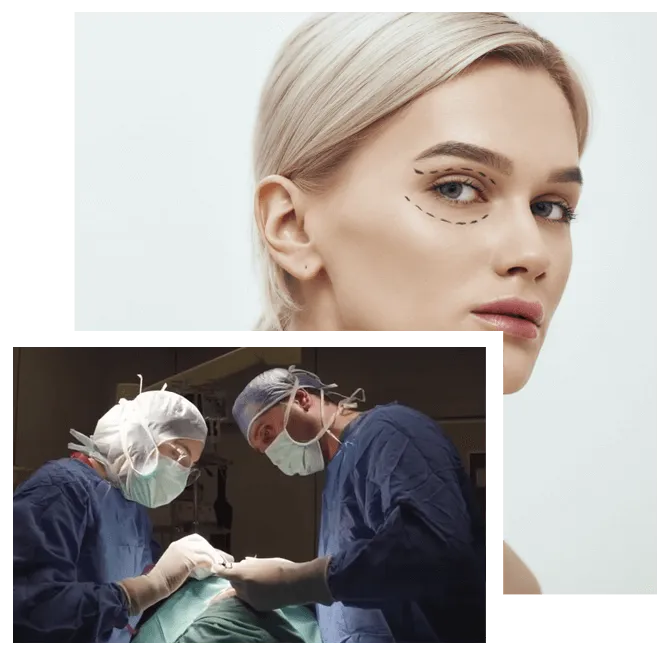
Blepharoplasty is eyelid surgery that removes or repositions excess skin and fat to correct heavy, drooping upper lids and puffy lower lids, so that the eyes look more rested and open. At his Istanbul clinic, Dr. Hasan Duygulu plans every blepharoplasty individually, based on your eyelid anatomy, brow position, skin quality and goals, and he treats only what needs treating to keep the result natural. If you are considering eyelid surgery in Turkey, our team will guide you from your first online consultation to your final follow-up.
Facelift at a Glance
The key facts before you read the details.
Op. Dr. Hasan Duygulu
Istanbul, Türkiye
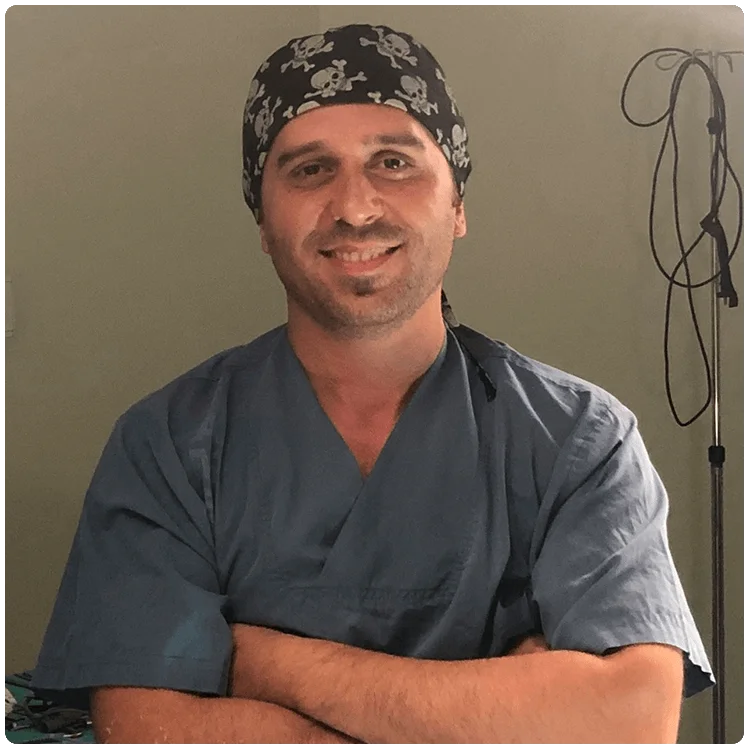
Op. Dr. Hasan Duygulu
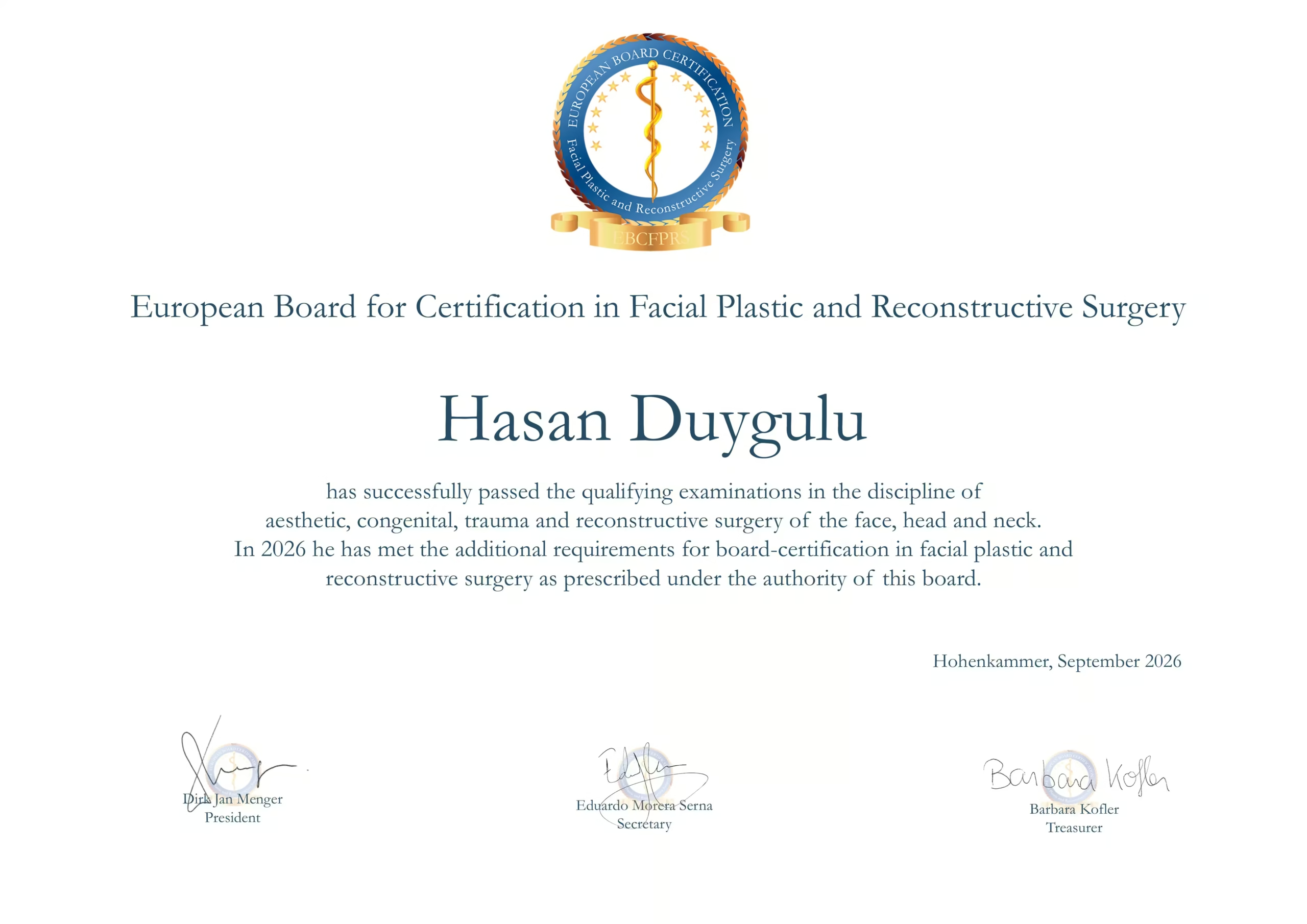
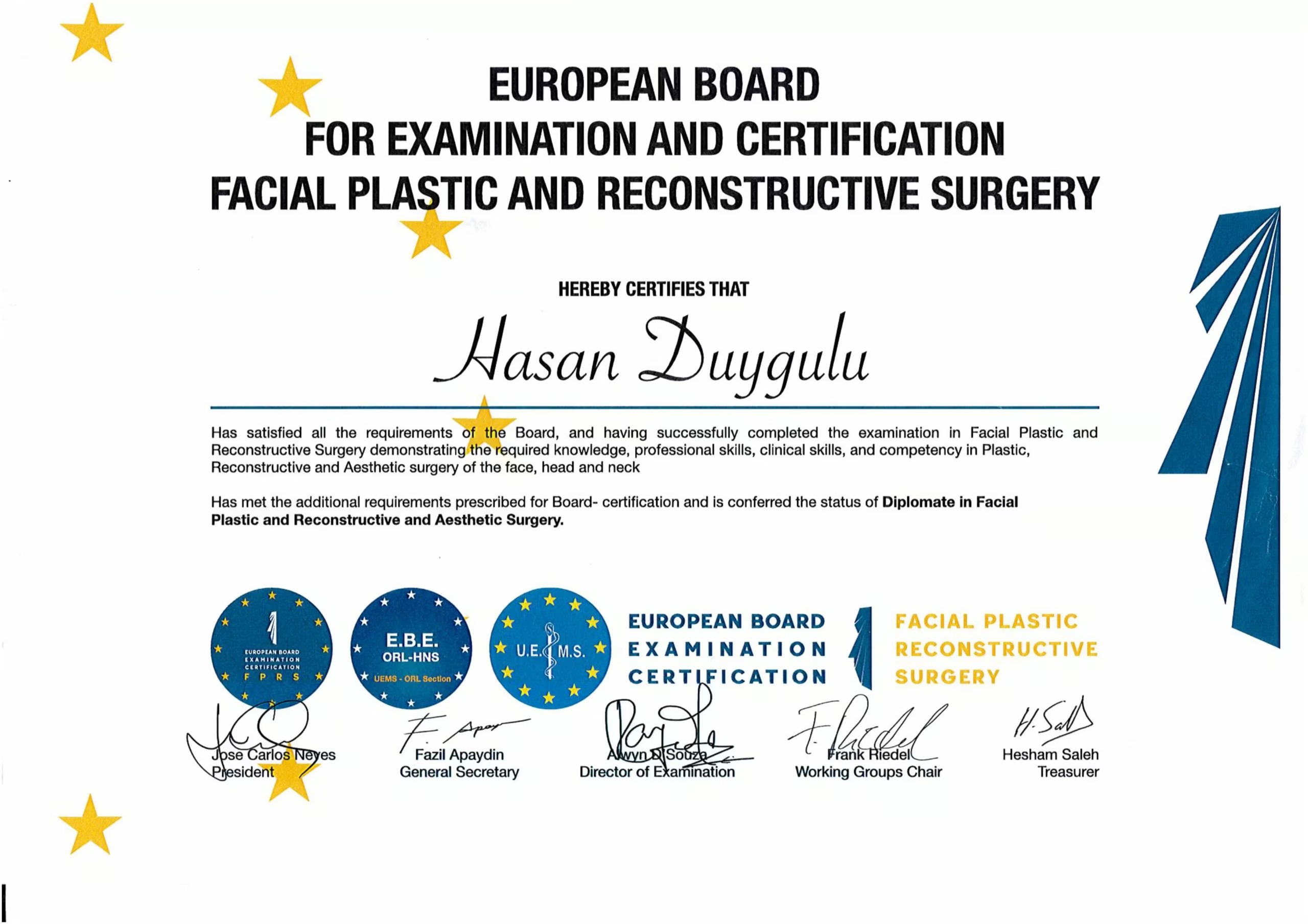
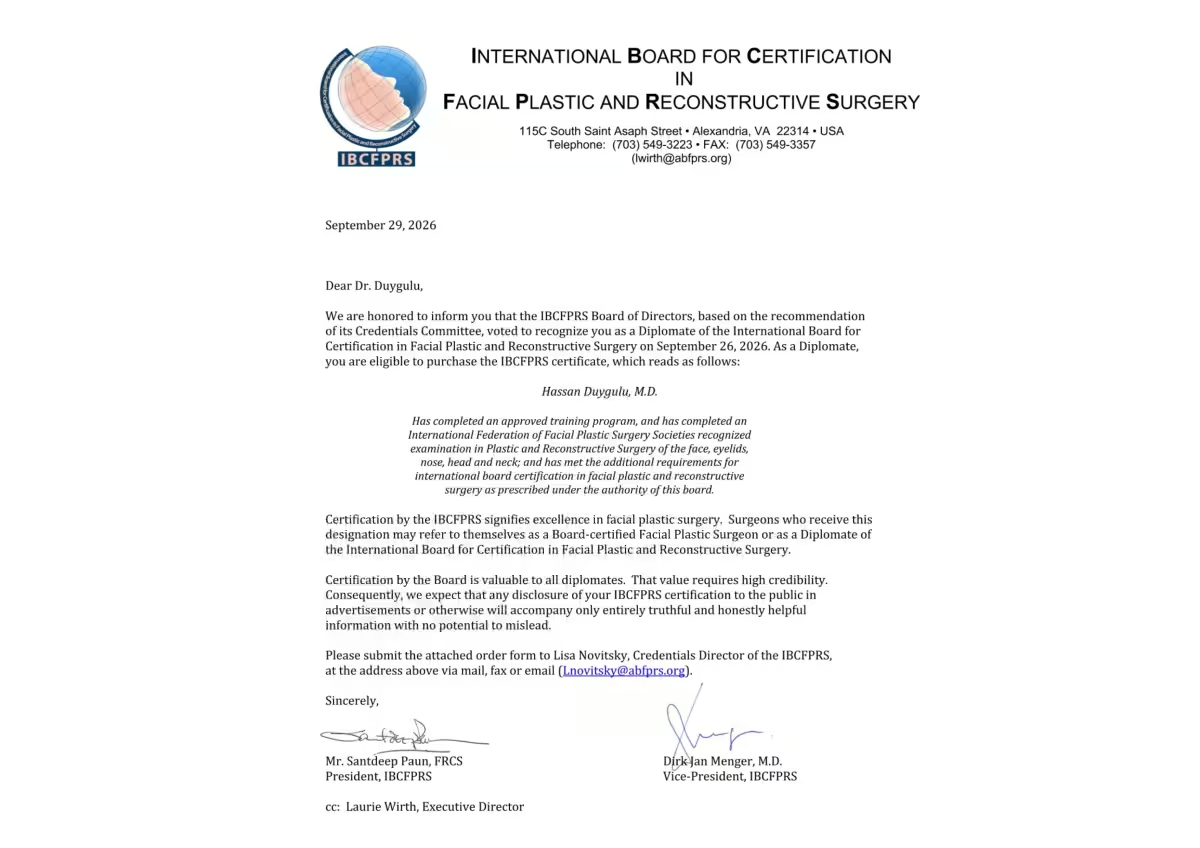
Born in Turkey, Dr. Hasan Duygulu graduated from Dokuz Eylül University Faculty of Medicine in 2009 and specialized in Ear, Nose and Throat (ENT) Diseases and Head & Neck Surgery. Throughout his career, he has focused on facial aesthetic and reconstructive surgery, with particular expertise in rhinoplasty, septoplasty, otoplasty and facelift. He holds double board certification in facial plastic and reconstructive surgery (EBCFPRS and IBCFPRS). His practice is built on detailed facial evaluation and personalized surgical planning, so that every result looks natural and respects the unique character of each patient’s face.
Dr. Hasan Duygulu’s training did not end with his specialty. He has attended advanced rhinoplasty courses and live surgery workshops across Europe, and in 2016 he took part in deep-plane facelift cadaver dissection courses, which keeps his methods aligned with current scientific literature.
With more than 15 years of experience and over 6,000 operations across rhinoplasty, septoplasty, otoplasty and facelift surgery, he has treated patients from more than 30 countries.
Every patient has a detailed one-on-one consultation, and Dr. Hasan Duygulu personally performs every stage of the surgery, from planning to the final follow-up visit.
Dr. Hasan Duygulu's approach to blepharoplasty
Tired or heavy-looking eyes do not always come from the eyelids. A low brow, a dropped cheek, weak lid support or a true droopy eyelid (ptosis) can create the same look, and each needs a different operation. Dr. Hasan Duygulu, an ENT and head and neck surgeon who focuses on facial aesthetic surgery, therefore examines the whole eye area before planning: the upper lid skin and fat, the lower lid fat pads, the tone of the lower lid, the brow position and the tear film. He chooses between upper, lower or combined surgery, and between removing and preserving fat, according to what your anatomy needs. The aim is rested, natural-looking eyes that still look like yours, never a hollow or surprised appearance.
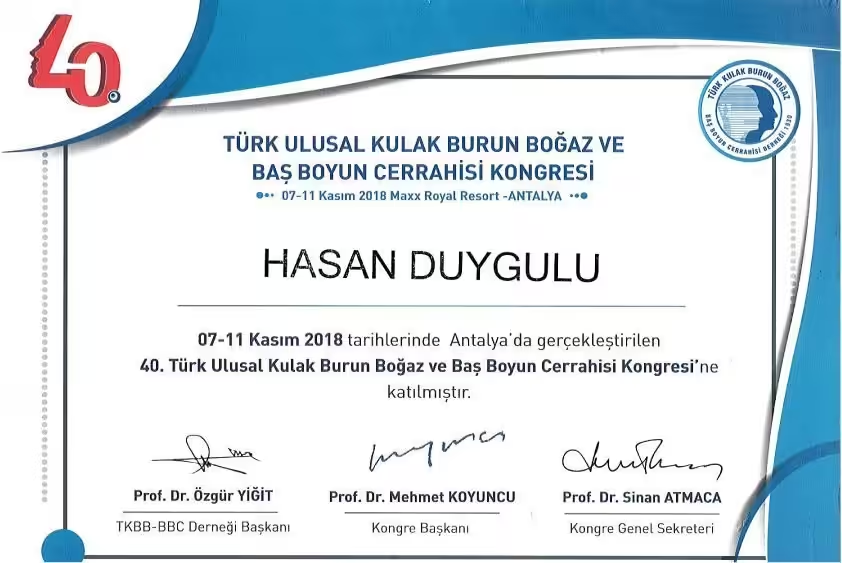
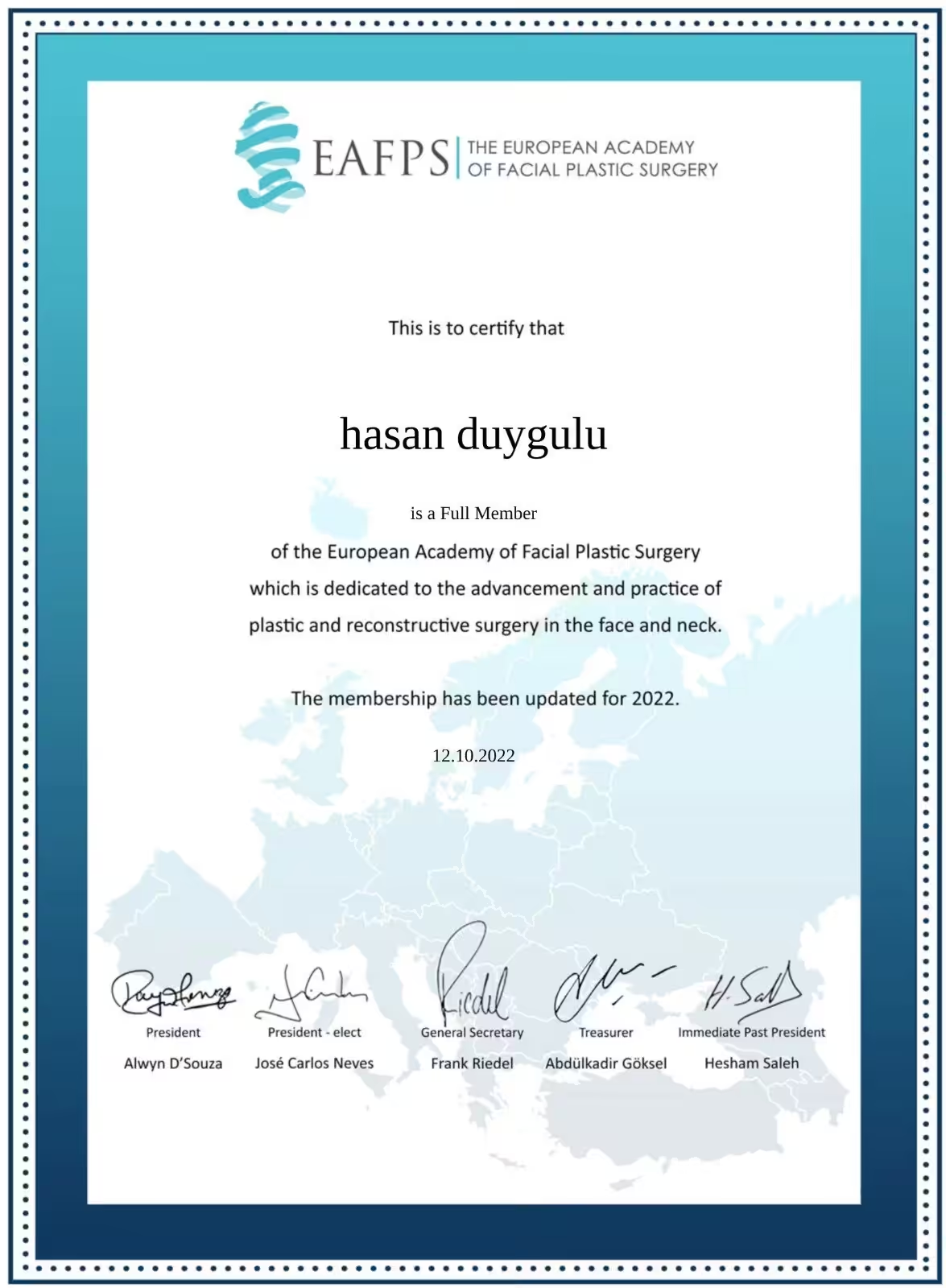
Certificate



Blepharoplasty Recovery Timeline
Swelling, tightness and bruising are expected. Discomfort is managed with prescribed medication. Head elevation is important.
Why Choose Turkey for Blepharoplasty
- Experienced surgeons: Many surgeons in Turkey treat patients from abroad regularly and take part in international medical communities.
- Modern hospitals: Procedures are performed in hospital settings that follow established clinical protocols.
- Cost advantage: Facelift prices in Turkey are generally lower than in many Western countries, largely because of different operating costs and exchange rates.
- Coordinated patient journey: Airport transfers, accommodation support, interpreters and follow-up can be organized for you.
- Shorter waiting times: Consultations and surgery can usually be scheduled promptly.
- Istanbul as a destination: A facelift requires a stay of about 7–10 days, and many patients choose to recover in one of the world’s most culturally rich cities.
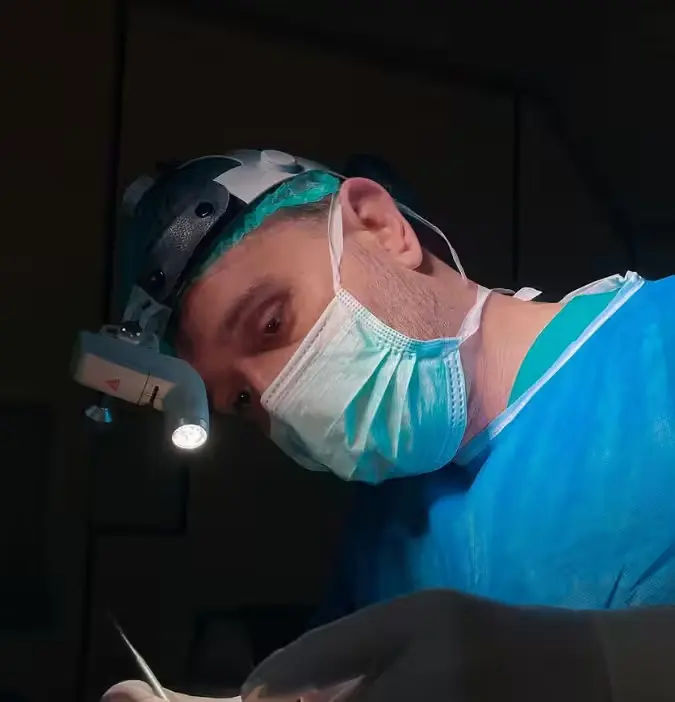
Your Blepharoplasty Journey in İstanbul with Dr. Hasan Duygulu
Consultation Request
Send clear photos of your face (front, both profiles and three-quarter views) via WhatsApp, email or the website form. Our coordination team is available 24/7 and replies within 24 hours.
Online Consultation with Dr. Duygulu
You discuss your goals, medical history and previous procedures. Dr. Duygulu plans each face individually, drawing on his facial and head & neck surgery experience, and gives a preliminary assessment. The final decision is made after an in-person examination.
Pre-Operative Planning
You receive written instructions on medications, supplements, smoking and alcohol. Our team helps with travel and accommodation planning.
Arrival & In-Person Assessment
Before surgery, you have a physical examination, any required blood tests and a final consultation with your surgeon.
Surgery Day
The procedure takes place in a hospital under anesthesia, with the technique agreed during your consultation. The aim is a natural result, never an "overdone" look.
Early Recovery & First Check
Dressings and drains, if used, are removed in the first days. Dr. Duygulu reviews your healing before you travel home.
Long-Term Follow-Up
We stay in contact after you return home, with photo-based check-ins as agreed with your surgeon.
Are You Ready to Begin Your Journey?
Connect directly with Op. Dr. Hasan Duygulu’s medical team on WhatsApp for a tailored evaluation and treatment plan.
What Is Blepharoplasty?
Blepharoplasty is the medical name for eyelid surgery. With age, eyelid skin loses elasticity, the muscle beneath it weakens and the fat pads around the eye can bulge forward. This creates hooded upper lids, bags under the eyes and a tired look. In some patients, heavy upper lids also block the upper part of the visual field, which makes the operation functional as well as cosmetic. Blepharoplasty removes or repositions the excess tissue. It can be done on the upper lids, the lower lids or both.
Upper blepharoplasty removes excess skin, and sometimes a small amount of muscle and fat, through an incision hidden in the natural upper eyelid crease. It is the shorter of the two operations.
Lower blepharoplasty treats bags, puffiness and loose skin. Your surgeon chooses between two approaches:
- Transconjunctival: The incision is made inside the lower lid, so there is no skin scar. It suits patients with fat bulging and little excess skin, and it carries a lower risk of pulling the lid down.
- Transcutaneous (subciliary): The incision is made just below the lashes. It allows loose skin and muscle to be removed and gives wide access for moving fat, so it suits patients with skin laxity.
Fat can be handled in three ways: removed when there is a clear excess, repositioned into the hollow under the eye to smooth the transition between lid and cheek (the tear trough), or supplemented with fat or filler where the area is hollow. Modern practice favors preserving fat over removing it, because over-removal can leave a hollow, aged look.
Why Patients Choose Dr. Duygulu for Facelift in Istanbul

Who Is a Good Candidate for Fox Eyes Surgery?
A fox eye lift may be suitable if you:
- Have a downward-slanting outer eye corner, a low brow tail or a tired-looking eye shape that bothers you
- Understand that the result is a structural change and not a temporary look
- Are in good general health, with no uncontrolled medical conditions
- Have healthy eyes and no significant dry eye problem
- Do not smoke, or are willing to stop at least 4 weeks before and after surgery
- Have realistic expectations: a natural lift, not a copy of another person’s eyes
- Are making the decision for yourself rather than following a social media trend or outside pressure
Candidacy can only be confirmed through a consultation in which your eye structure, lower eyelid tone, brow position, skin quality, medical history and goals are assessed together.
Who May Not Be a Good Candidate?
Blepharoplasty may need to be postponed or may not be recommended if you:
- Have significant dry eyes or other eye surface problems
- Have untreated thyroid eye disease, uncontrolled diabetes, high blood pressure or a bleeding disorder
- Take blood-thinning medication that cannot be safely paused
- Have a true droopy eyelid (ptosis) or a low brow that needs a different operation first
- Have marked lower lid laxity, which needs lid support alongside the surgery
- Smoke and are unwilling to stop
- Want a result that is not anatomically realistic

What Happens During Blepharoplasty?
Blepharoplasty is performed in a hospital setting under local anesthesia with sedation or under general anesthesia, depending on the plan and your preference. An upper blepharoplasty usually takes about 45 minutes, a lower blepharoplasty about 1 to 1.5 hours, and combined surgery somewhat longer.
In the upper lids, the surgeon marks the natural crease, removes the planned amount of skin and any excess tissue, and closes the incision with fine sutures that sit in the crease. In the lower lids, the surgeon works either inside the lid or just below the lashes, removes or repositions fat, tightens or trims skin where needed and, if the lid is lax, supports the outer corner with a canthopexy.
After surgery, cold compresses and lubricating ointment are used, and most patients go home the same day.
Things To Do Before Blepharoplasty
- Share your full medical history, allergies, current medications, thyroid or dry eye problems and contact lens use
- Stop smoking and nicotine products at least 4 weeks before surgery
- Avoid alcohol in the weeks leading up to surgery as advised
- Ask your surgeon which medications and supplements to stop, such as aspirin, ibuprofen, vitamin E, fish oil and herbal products. Never stop prescribed medication without medical advice.
- Follow fasting instructions if you will have sedation or general anesthesia
- Arrange a companion for the first days
- Bring sunglasses, lubricating drops as advised and loose, front-opening clothing
Things To Do After Blepharoplasty
- Keep your head elevated, including during sleep, for the first days
- Apply cold compresses as instructed to limit swelling
- Use the prescribed eye drops and ointment and follow wound care instructions
- Do not rub the eyes, and avoid contact lenses until cleared
- Avoid heavy lifting, bending and strenuous exercise for as long as advised
- Do not smoke during recovery
- Wear sunglasses and protect the eyelid skin from the sun, and avoid heat such as saunas and hammams until cleared
- Attend all follow-up appointments
- Contact your surgeon immediately if you notice sudden or severe pain, one-sided swelling that increases quickly, vision changes, an eye that does not close fully, fever or spreading redness
Flying Home After Blepharoplasty
Blepharoplasty recovery in Turkey starts in Istanbul, so plan to stay for about 5–7 days. This allows early dressing changes, suture removal and a first check of your eyes before the journey home. Cabin air is dry, which can irritate healing eyes, so your surgeon will advise on lubricating drops and confirm when it is safe to fly. Share your travel plans early so your return date can be arranged around your recovery.
Risks and Possible Complications
Every surgery carries risks. Blepharoplasty is usually safe, but it is an elective procedure, so it is important to understand them before deciding. Possible risks include:
- Bleeding or hematoma (a collection of blood), which may require urgent treatment
- Infection
- Dry, irritated or watery eyes, and temporary difficulty closing the eyes fully
- Temporary blurred or double vision, and light sensitivity
- Lower lid malposition, where the lid is pulled down (retraction, visible white below the iris) or turns outward (ectropion). This is the main risk of lower lid surgery and may need further treatment.
- Asymmetry between the two sides
- Visible, widened or thickened scars, or small milia (tiny white cysts) along the incision
- Over- or under-correction, including a hollow look from too much fat removal
- Rare but serious problems affecting vision
- Risks related to anesthesia and blood clots
Dr. Duygulu will review these risks with you in detail during your consultation. Choosing a qualified surgeon, disclosing your full medical history and following aftercare instructions all help lower the risk.
How Long Do Blepharoplasty Results Last?
Blepharoplasty does not stop aging, but removing excess skin and fat is a lasting change, and many patients enjoy their result for years. Upper lid results often last longer, while lower lid results depend more on skin quality, fat handling and how the cheek ages. Genetics, sun exposure, smoking and weight changes all influence how long the result stays visible. Good skincare and sun protection help it last, and some patients choose a small touch-up later.
How to Choose a Blepharoplasty Surgeon in Turkey
Selecting the right surgeon matters more than the destination. Before booking eyelid surgery in Turkey, check:
- Qualifications: The surgeon’s specialty, training and experience in eyelid and facial surgery. Verify credentials through official medical associations rather than relying on clinic websites alone.
- Whole-eye assessment: Whether the surgeon checks your brows, lid tone and eye surface, and not only the excess skin.
- Technique clarity: Which approach is planned for the lower lids (inside or below the lashes) and how fat will be handled.
- Facility: That the operation takes place in a licensed hospital with full anesthesia and emergency capability.
- Personal involvement: Whether the surgeon personally performs the operation and follows your recovery.
- Real results: Before and after photos of the surgeon’s own patients, with consent, and independent reviews.
- Aftercare: How you can reach the team after you return home.
Be cautious of any offer that promises a guaranteed result or quotes a fixed price without reviewing your photos and medical history.

Blepharoplasty and Related Facial Procedures
The technique is chosen after examination, not before. These are the approaches most commonly discussed by patients researching blepharoplasty in Turkey.
Upper Blepharoplasty
Upper blepharoplasty removes excess skin through an incision hidden in the natural eyelid crease. It lifts heavy, hooded lids and gives the eyes a more open, rested look.
Lower Blepharoplasty
Lower blepharoplasty treats puffiness, bags and loose skin under the eyes. Fat is removed or repositioned through the inside of the lid or below the lashes for a smooth lid-cheek line.
Canthopexy
Canthopexy tightens the tendon at the outer corner of the lower lid to support it. It is added when the lid is loose, to reduce the risk of the lid pulling down.
Ptosis Correction
Ptosis is a droopy upper lid caused by a weak lid-lifting muscle, not excess skin. Blepharoplasty alone does not fix it, so the muscle is tightened in a separate correction.
Brow Lift
A low brow can make the upper lids look heavy even when the eyelid skin is normal. A brow lift raises the brow to open the eye area, alone or with blepharoplasty.
Fox Eyes
Fox eyes surgery lifts the outer corner of the eye and the tail of the brow to create a longer, upturned almond shape. It is planned separately from blepharoplasty.
Get In Contact With Us
Want to know more about the price and options for Facelift in Turkey? Contact us today for a free consultation!
Ask Our Experts!
You can fill out the form to get answers to all your questions and detailed information about treatments.
What Determines the Cost of Blepharoplasty in Turkey?
Blepharoplasty cost in Turkey depends on your individual surgical plan, which is why a reliable quote is only possible after reviewing your photos and medical history. The main factors are:
- Whether upper lids, lower lids or both are treated
- The lower lid approach and how fat is handled (removal, repositioning or added volume)
- Whether canthopexy, ptosis correction or a brow lift is added
- The surgeon’s experience
- Hospital and operating room standards
- Anesthesia type and duration of surgery
- Pre-operative tests such as blood work and eye assessment
- Post-operative care, including follow-up visits, sutures removal and medications
- Additional services such as transfers, accommodation and interpreter support
Frequently Asked Questions
Is blepharoplasty in Turkey safe?
Safety depends on the surgeon’s qualifications, the hospital’s standards, your health and your aftercare, not on the country. Check your surgeon’s credentials, confirm the operation takes place in a licensed hospital, and plan enough time for follow-up before flying home.
What is the difference between upper and lower blepharoplasty?
Upper blepharoplasty removes excess skin from the upper lids through the natural crease. Lower blepharoplasty treats bags, fat bulging and loose skin under the eyes. Many patients need only one, and some benefit from both.
Should lower blepharoplasty be done inside the lid or below the lashes?
The inside approach (transconjunctival) leaves no skin scar and suits patients with fat bulging and little excess skin. The approach below the lashes (transcutaneous) allows loose skin to be removed and gives wide access for moving fat. Your surgeon chooses according to your anatomy.
Will fat be removed or kept?
Where possible, we preserve fat. Excess fat can be removed, but it is often repositioned into the hollow under the eye to smooth the lid-cheek transition. Over-removal can leave a hollow look.
Can blepharoplasty remove dark circles?
It can soften the shadows caused by bulging fat and hollows, but it does not remove circles caused by skin pigment. A skin treatment may be added for that.
Is my problem my eyelids or my brows?
A low brow can make the upper lids look heavy. If you lift the brow gently with your fingers and the heaviness disappears, a brow lift, alone or with blepharoplasty, may suit you better. Dr. Duygulu checks this at your consultation.
Can blepharoplasty fix a droopy eyelid?
Only if the heaviness comes from excess skin. A true droopy lid (ptosis) is caused by the muscle that lifts the lid and needs a separate correction.
Will I look surprised or hollow afterwards?
The aim is a rested look, not a changed one. Conservative skin and fat removal and careful lid support are the best protection against a surprised or hollow appearance.
What is a canthopexy and will I need one?
A canthopexy tightens the outer corner of the lower lid to support it. It may be added to lower blepharoplasty when the lid is loose, to lower the risk of the lid being pulled down.
Does blepharoplasty change the shape of my eyes?
It does not change the basic shape or color of your eyes, but it can make the eyes look more open. If you want an upturned, almond shape, see our Fox Eyes page.
Can blepharoplasty be combined with other procedures?
Yes. It is often combined with a brow lift, facelift or skin treatments. Your surgeon will tell you which combinations are safe for you.
Can I have blepharoplasty if I wear contact lenses or glasses?
Yes. You will be asked to stop wearing lenses for a period before surgery and to avoid them until your surgeon clears you afterwards.
Can blepharoplasty be repeated?
A second operation is possible but more complex, because scar tissue and less available skin limit what can be done. Careful first-time planning matters.
Can I have blepharoplasty if I smoke?
Smoking slows healing and raises complication risk. You will be asked to stop at least 4 weeks before and after surgery.