Constricted Ear Correction in Turkey, Istanbul
MD Hasan Duygulu
A constricted ear, also known as a lop ear or cup ear, occurs when the upper rim of the ear (the helix) is folded, tight, or underdeveloped, giving the ear a smaller, rolled, or folded-over appearance compared to a typical ear shape. This congenital difference can range from a subtle fold at the top of the ear to a more significant constriction affecting the ear’s overall height and contour. If a constricted ear is affecting your child’s confidence (or your own), correction offers an effective path toward a more typical, balanced ear shape. Turkey has become a trusted destination for constricted ear correction, combining specialized reconstructive expertise, modern surgical facilities, and cost-effective treatment options for international families.
At Dr. Hasan Duygulu’s clinic, we provide comprehensive evaluation and individualized treatment for patients with constricted ears, from newborns who may be candidates for non-surgical molding to older children and adults who require surgical correction. Our clinic in Turkey combines careful diagnostic assessment with reconstructive techniques tailored to the severity of the deformity, focusing on restoring natural ear proportions, preserving healthy tissue, and achieving results that look as natural as possible.
Accessible Team
of Experience
Overview of Stahl's Ear Deformity Correction
Local/General
1 Hours
1 Day
5-7 Days Later
1 Week
6 Months - 1 Year
Why Choose Turkey for Constricted Ear Correction?
Choosing the right destination for a specialized reconstructive procedure such as constricted ear correction is an important decision, particularly when the patient is a child. Turkey has established itself as a global leader in medical tourism, offering unique advantages for international families and patients:
Specialized Reconstructive Expertise: Turkey is home to highly qualified plastic and reconstructive surgeons with international training and specific experience in complex ear deformities, such as Dr. Hasan Duygulu.
Advanced Medical Facilities: Hospitals and clinics are equipped with state-of-the-art technology and operate in accordance with international quality and patient safety standards, which matters especially when procedures involve children or cartilage grafting.
Cost-Effective Treatment: Patients can receive high-quality constricted ear correction at significantly lower costs compared to many Western European countries and the United States, without compromising surgical quality or patient care.
Comprehensive Medical Tourism Services: Many clinics in Turkey provide all-inclusive treatment packages that may include the surgical procedure, accommodation, airport transfers, and interpreter services, allowing international families to navigate treatment abroad with less stress.
Combined with Turkey’s rich cultural heritage, welcoming hospitality, and excellent healthcare infrastructure, constricted ear correction can be paired with a comfortable, well-supported treatment journey for the whole family.
Why Choose Hasan Duygulu for Constricted Ear Correction?
- Expertise and Experience: Dr. Hasan Duygulu is a board-certified plastic surgeon with extensive experience in ear reconstructive procedures, including the more technically demanding cases of moderate-to-severe constricted ear deformity.
- Individualized Evaluation: Every patient undergoes a comprehensive evaluation, since constricted ears vary widely in severity and each case calls for a tailored surgical (or, in newborns, non-surgical) plan.
- Comprehensive Services: From the initial consultation through surgery and postoperative follow-up, Dr. Hasan Duygulu and his team provide personalized support at every stage of the treatment journey.
- Cost-Effective Solutions: Dr. Hasan Duygulu’s clinic offers competitive pricing and transparent treatment plans, making high-quality constricted ear correction in Turkey accessible to patients and families from around the world.
What is a Constricted Ear?
A constricted ear refers to a group of ear deformities in which the top rim of the ear (the helical rim) is folded over, wrinkled, or tight, rather than smoothly curved as in a typical ear. This condition can range from mild to severe:
- Mild form (“lop ear”): Only the rim of the upper ear (helix) is folded over. The ear’s overall size may be close to normal.
- Moderate to severe form (“cup ear”): The cartilage of both the helix and the scapha (the shallow groove just below the rim) is constricted, forming a tighter roll. The ear may appear noticeably smaller in height, flattened, or (in the most severe cases) rolled into a narrow, tube-like shape.
Constricted ears can affect one ear or both. When both ears are affected, the degree of constriction is not always symmetrical, and your surgeon will discuss whether to correct both ears at the same time or in stages.
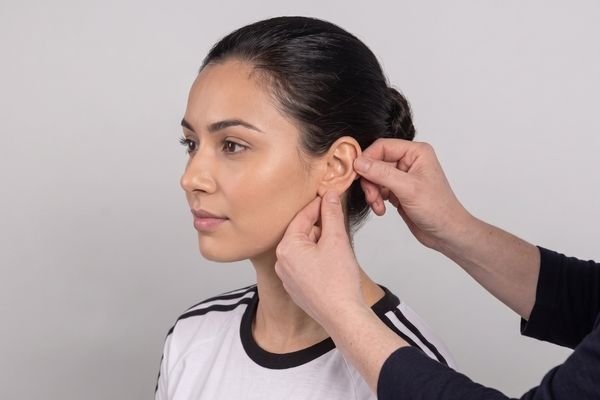
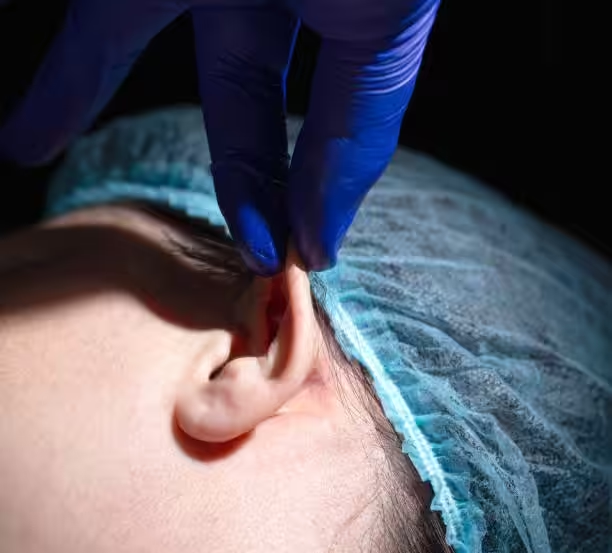
What Causes a Constricted Ear?
The exact cause of constricted ear is not fully understood. Based on current medical literature, contributing factors are thought to include:
- A relative shortage of skin, cartilage, or both in the affected area of the ear, present from early fetal development.
- Congenital (present-from-birth) developmental variation: constricted ear is not caused by anything the parents did during pregnancy.
- Genetic or familial patterns, though a constricted ear can also occur with no known family history.
It is important to understand that a constricted ear is a structural, congenital difference in how the ear cartilage developed, not the result of injury, infection, or anything reversible through non-surgical means once the cartilage has hardened.
How Severe is My Child's Constricted Ear? Understanding the Grades
Surgeons commonly describe constricted ear deformities along a spectrum of severity, since this directly affects which treatment approach, molding or surgery, and which surgical technique, is most appropriate:
- Grade I (Mild): A slight folding of the helical rim only, often with a mild deficiency in skin and cartilage, while overall ear size and shape are largely preserved. Often the most straightforward to treat, sometimes successfully with molding alone if caught early, or with more limited surgery later.
- Grade II (Moderate): A more significant constriction, with a noticeable deficiency of cartilage extending into the scapha and concha, causing more noticeable flattening or reduction in the ear’s vertical height. Surgical correction typically requires added structural support, not only reshaping of existing cartilage.
- Grade III (Severe / “cup ear” or “lop ear”): The most significant form, with a profound lack of cartilage and skin across the upper and middle portions of the ear. The ear may appear small, malformed, and pulled downward, and in some cases the earlobe can also be affected. These cases almost always require cartilage grafting (most often from the rib) to rebuild adequate structural support, and can sometimes require more than one surgical stage.
An in-person examination is the only way to determine which grade applies to a specific ear, since the same general category can present differently from patient to patient.
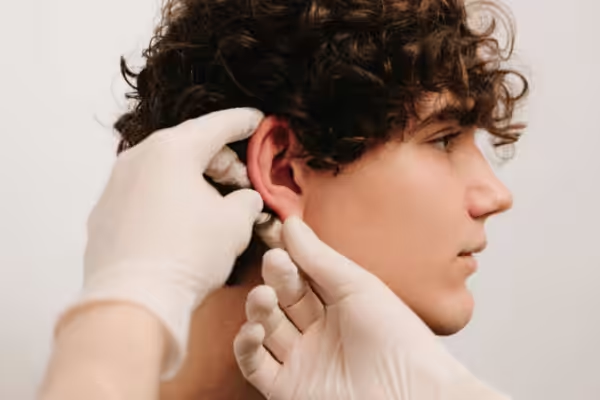
Symptoms and How Constricted Ear is Diagnosed
The signs of a constricted ear are visible from birth, and diagnosis is made through clinical examination rather than any invasive testing.
What to look for:
- Folded or rolled helix: the upper rim of the ear appears folded inward, rolled, or tightly curved rather than smoothly rounded.
- A narrower or smaller-looking ear, particularly in the upper portion.
- A prominent-looking antihelix, sometimes appearing more noticeable simply because the folded helix beside it draws attention to it.
- A downward pull to the ear’s upper pole in more severe cases, where cartilage is significantly deficient.
- Earlobe involvement in some severe (Grade III) cases.
- The condition can affect one ear or both, and when both are affected, the severity is not always symmetrical.
Rare functional considerations: Constricted ear is primarily a structural and aesthetic condition rather than a medical or hearing problem. In very rare, severe cases where the outer ear canal opening is affected by the constriction, some patients report minor practical difficulties, such as fitting glasses comfortably or, uncommonly, a mild effect on how sound is funneled into the ear canal. These are the exception rather than the rule, and any concern about hearing should always be assessed separately by the appropriate specialist alongside the aesthetic evaluation.
How diagnosis is made:
- Clinical examination: a plastic surgeon or ENT specialist visually and manually assesses the degree of constriction and the underlying cartilage structure.
- Medical and family history: including whether any relatives have had similar ear differences.
- Photographic documentation: standardized photos are typically taken both to support treatment planning and to track progress after treatment.
Early diagnosis matters most for newborns, since it directly determines whether non-surgical ear molding remains a realistic option (see below).
Non-Surgical Treatment: Ear Molding for Newborns
For newborns, a constricted ear deformity may respond to non-surgical ear molding: reshaping the ear cartilage with a specialized molding device while it is still soft and pliable, thanks to naturally circulating maternal hormones shortly after birth.
Key points about ear molding:
- Timing is critical. Molding is most effective when started as early as possible, ideally within the first one to three weeks of life, and is generally considered significantly less effective after roughly six weeks of age, as the ear cartilage begins to stiffen.
- It can often help avoid surgery entirely for infants treated early enough and for whom molding is a suitable option.
- Not every case is suitable for molding alone: the severity of the constriction, and how the ear responds during initial molding, will guide whether this approach is likely to succeed.
- If molding is not started in time, or the deformity does not fully resolve with molding, surgical correction later in childhood is a safe and effective alternative.
If your baby has been born with a constricted, folded, or unusually shaped ear, we recommend seeking an evaluation as soon as possible after birth, even a few weeks’ delay can affect whether molding remains a realistic option.
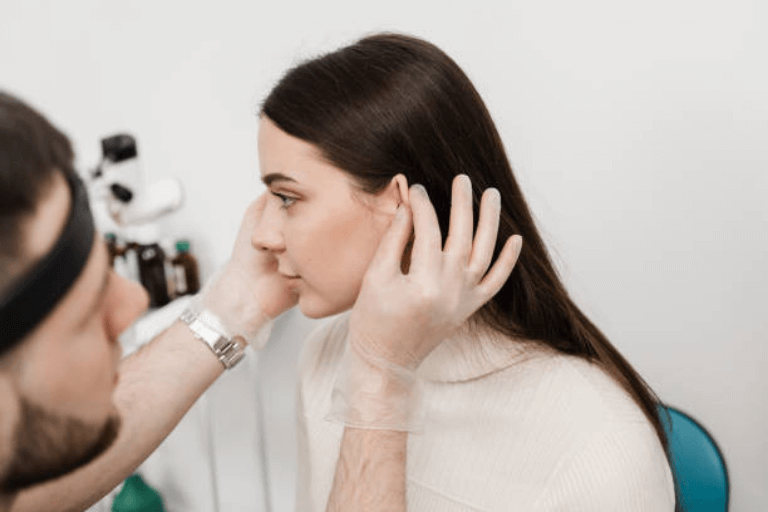
Who is a Candidate for Constricted Ear Correction Surgery?
Since molding is only effective in early infancy, most patients presenting for surgical constricted ear correction fall into one of these groups:
- Children whose ear molding window has passed, or whose constriction did not fully respond to molding.
- Older children, typically once the ear cartilage has matured and is close to its adult size and strength, most surgeons recommend surgery no earlier than around 5 years of age, since by this stage the ear has generally reached roughly 85–90% of its eventual adult size, allowing for stable, proportional results. Surgery is often planned around ages 5–7 specifically to help address the deformity before a child begins school and may face teasing from peers.
- Adolescents and adults who were not treated in childhood and now wish to correct the appearance of their ear(s).
Good candidates for surgery are generally in good overall health, free of active ear infections or skin conditions in the surgical area, and (for older children and adults) able to understand the procedure and have realistic expectations about the outcome.
Who is NOT (Yet) a Candidate?
- Newborns and very young infants are not surgical candidates, molding should be explored first, if the timing allows.
- Children whose ear cartilage has not sufficiently matured, typically before around 5 years of age, since younger cartilage may not reliably hold certain suturing and reshaping techniques, and the ear still has significant growth ahead of it.
- Patients with an active ear infection, skin infection, or unhealed injury in the area, these should be resolved before any surgical planning.
- Patients expecting a “perfect” or completely symmetrical outcome: constricted ear correction, especially in more severe grades, aims for meaningful, natural-looking improvement rather than an idealized result, and some degree of asymmetry between the two ears is normal even after surgery.

How is Constricted Ear Correction Surgery Performed?
Because constricted ear deformities vary so widely in severity, the surgical approach is tailored to each patient’s specific anatomy. In general terms, the surgery follows these stages:
Anesthesia Performed under local anesthesia for older children and adults, or general anesthesia for younger children, depending on age, extent of correction, and patient comfort.
Incision Procedure Incisions are placed within the natural folds of the ear or behind it wherever possible, to keep resulting scars as discreet as possible.
Cartilage Correction For milder (Grade I) cases, the surgeon works with the patient’s own existing cartilage, releasing the constricted tissue, reshaping it, and securing it with sutures to restore more typical height and contour. For moderate (Grade II) cases, a cartilage graft is often needed, frequently taken from the patient’s own ear (conchal cartilage) to add structural support. For severe (Grade III) cases, a larger cartilage graft, most often taken from the rib, is typically required to rebuild the missing structural support of the helix. If a tight band of skin is pulling the rim down, additional skin and cartilage may be borrowed from the unaffected ear (for unilateral cases) to help match both sides.
Final Touch Once the desired shape and proportion are achieved, incisions are closed with fine sutures, and a protective dressing is applied to support the new shape during initial healing.
How the Technique Changes by Grade
Because a mild fold and a severely deficient “cup ear” call for very different levels of reconstruction, the specific technique used is matched to the grade identified during your evaluation:
- Grade I (Mild): Often addressed through cartilage scoring and suturing: gently weakening the cartilage so it can be reshaped, then holding it in its new, more open position with sutures to restore the natural curve of the helix. A small amount of excess skin may also be trimmed or redraped.
- Grade II (Moderate): Usually requires cartilage grafting in addition to reshaping, since the existing tissue alone is not enough to rebuild the missing contour. Graft material may be taken from the patient’s own conchal cartilage (from the same ear or the opposite ear) in less severe Grade II cases. These cases often combine scoring, suturing, and grafting together.
- Grade III (Severe): Requires more extensive cartilage reconstruction, almost always using rib (costal) cartilage grafts to build an entirely new supporting framework for the upper and middle ear. When skin and soft tissue are also deficient, local skin flaps (or, less commonly, skin grafts) may be needed to cover the reconstructed framework. In the most complex cases, correction may be planned as two or more surgical stages, allowing healing and assessment between each step.

The Constricted Ear Correction Procedure at Hasan Duygulu
- Initial Consultation & Analysis: The ear anatomy is carefully evaluated in detail, including the grade of constriction, available cartilage, skin quality, and (for children) growth stage. Medical history is reviewed and aesthetic/functional goals are discussed with the patient and, for younger patients, their family.
- Treatment Planning: Based on severity, a plan is developed: correction using existing cartilage, or reconstruction with a cartilage graft if needed. For bilateral cases, we discuss whether to treat both ears together or in stages.
- Anesthesia: Local or general anesthesia is selected based on age and the extent of the planned correction.
- Surgical Correction: Incisions are placed discreetly; the constricted cartilage is released, reshaped, and (if needed) reinforced with grafted cartilage to rebuild the ear’s natural contour and height.
- Closing Incisions: Fine sutures close the incisions, positioned to minimize visible scarring.
- Bandaging: A protective head dressing supports the corrected shape, reduces swelling, and protects the ear during the earliest phase of healing.
- Follow-Up Care: Scheduled visits monitor healing, remove non-dissolvable sutures if used, and track how the ear settles into its final shape over time.
The Constricted Ear Correction Procedure at Hasan Duygulu
Understand the key differences between the two procedures.
Feature | Constricted Ear Correction | Otoplasty (Ear Pinning) |
Primary Purpose | Restores the missing height, contour, and unfolds the rim of a structurally underdeveloped ear. | Repositions prominent ears closer to the head without changing the ear’s underlying structure. |
Ideal Candidates | Individuals born with a folded, rolled, or undersized helical rim (lop/cup ear). | Individuals with normal-sized, normally-formed ears that stick out. |
Surgical Technique | May involve releasing constricted cartilage, reshaping, and, for moderate-to-severe cases, cartilage grafting (from the patient’s own ear for moderate cases, or from the rib for severe cases). | Reshapes, scores, or repositions existing cartilage; rarely requires grafting. |
Complexity | Can range from straightforward to highly complex reconstructive surgery, depending on grade. | Generally more standardized across patients. |
Typical Timing | Non-surgical molding in the first weeks of life if possible; surgery generally from around age 5 onward. | Typically performed from around age 5–7 onward, once ear growth is largely complete. |
Results | Aims for a more typical, proportionate ear shape and height; some natural asymmetry may remain. | Aims for improved ear position and symmetry, with the original ear size preserved. |
Unsure which category your case falls into? An in-person or photo-based evaluation with Dr. Hasan Duygulu can clarify the most appropriate approach for your specific ear anatomy.
Constricted Ear Correction and Related Ear Procedures
Constricted ears can be combined with other ear differences, and each case needs its own plan. Dr. Hasan Duygulu evaluates the shape of your ear and offers targeted procedures for each concern.
Otoplasty
Reshapes prominent or uneven ears and pins them closer to the head for a balanced, natural appearance. It is suitable for both children and adults.
Cryptotia Correction
Frees and reshapes an ear whose upper part is buried beneath the scalp skin. The procedure releases the ear and recreates a natural fold behind it.
Revision Otoplasty
Corrects unsatisfactory results after a previous ear surgery, such as asymmetry, ears that are still prominent or an unnatural shape. Dr. Hasan Duygulu plans each case carefully around the existing structure.
Ear Reduction Surgery
Reduces the overall size of ears that are larger than your facial proportions. The goal is a balanced result that looks natural and fits your face.
Scapha Reduction Surgery
Reduces an enlarged scapha, the curved area between the outer rim and the inner fold of the ear. Dr. Hasan Duygulu refines this area for a smoother, more proportionate ear.
Things to Do Before Constricted Ear Correction Surgery
- Share your concerns and goals with our medical team, including any previous evaluations or attempts at ear molding, so we can plan the right approach for the specific anatomy.
- Complete a general health evaluation; disclose any allergies, chronic conditions, or prior ear infections.
- For adult and adolescent patients, stop smoking and consuming alcohol for the period recommended by your surgeon, as this affects healing.
- Follow the pre-operative fasting and medication instructions provided, particularly if general anesthesia is planned for a younger child.
- Bring any relevant medical history or photographs documenting how the ear has looked over time, which can help the surgical team plan the correction.
Things to Do After Constricted Ear Correction Surgery
- Follow all instructions provided by our team, especially regarding protective headbands or dressings, since these support the new shape during healing.
- For children, supervise play carefully and discourage touching, rubbing, or sleeping directly on the treated ear(s).
- Avoid heavy physical activity, contact sports, and swimming for the period recommended by your surgeon.
- Avoid alcohol and smoking during the recommended healing period (adult patients).
- Attend all scheduled follow-up appointments so healing can be monitored and any concerns addressed early.

Recovery Journey After Constricted Ear Correction
Days 1–3: Initial Recovery: A protective bandage or headband is worn to support the new shape and reduce swelling. Mild discomfort, swelling, and bruising are normal and manageable with appropriate pain relief. Keeping the head elevated, even while sleeping, helps reduce swelling.
Week 1–2: Bandage Removal & Early Healing: The initial dressing is typically removed during a follow-up visit within the first one to two weeks. A soft protective headband, especially for nighttime wear, may be recommended for several more weeks, particularly important for children who may turn onto the ear during sleep.
Months 1–3: Gradual Return to Activity: Swelling and bruising continue to subside. Normal daily activities can gradually resume once cleared by the surgeon; contact sports and activities that risk direct impact to the ear should be avoided for several months, especially if cartilage grafting was performed.
Months 3–6 (and beyond for grafted cases): Final Results Emerge: The final shape becomes clearer as residual swelling resolves and grafted or reshaped cartilage fully settles and matures. In cases involving rib cartilage grafts, full settling can take longer than in more straightforward cases.
Potential Risks and Complications
Constricted ear correction is a well-established reconstructive procedure, but, as with any surgery, and particularly one that may involve cartilage grafting, it carries some potential risks. These are discussed in detail during consultation, along with the steps taken to minimize them:
- Bleeding or hematoma: blood accumulation under the skin, which may occasionally require drainage.
- Infection: uncommon with sterile technique and, when indicated, antibiotics.
- Asymmetry: some difference between the two ears may persist, particularly in bilateral cases with differing starting severity.
- Changes in sensation: temporary, or rarely permanent, numbness or altered sensation around the ear.
- Cartilage or contour irregularities: visible bumps, sharp edges, or an uneven contour, which can occasionally require a minor revision.
- Graft-related risks (when a rib cartilage graft is used), including a scar at the rib donor site, and a small risk of graft warping or resorption over time.
- Scarring: incisions are placed to be as inconspicuous as possible, but visible or, rarely, hypertrophic/keloid scarring is possible.
- Under- or over-correction: occasionally requiring a further surgical adjustment to achieve the intended shape.
Our clinic follows strict sterilization protocols, uses surgeons experienced specifically in complex ear reconstruction, and provides comprehensive pre- and post-operative care to help minimize these risks.
Constricted Ear Correction Cost: Understanding Your Investment
The cost of constricted ear correction varies more than many aesthetic ear procedures, because the required technique depends heavily on the severity of the deformity, a mild, rim-only correction is a very different undertaking from a severe case requiring rib cartilage grafting. During your consultation, our medical team will conduct a thorough evaluation and provide a personalized, transparent quotation.
Cost Factors for Constricted Ear Correction:
- Severity/Grade of the Deformity: Mild cases using existing cartilage are generally less costly than severe cases requiring grafting.
- Need for Cartilage Grafting: Rib cartilage grafting adds a second surgical site and additional operative time, which affects the overall cost.
- Anesthesia Type: General anesthesia (typically needed for younger children or more extensive surgery) costs more than local anesthesia.
- Unilateral vs. Bilateral Correction: Treating both ears, whether together or in stages, affects total cost.
- Surgeon’s Fee: Based on the surgeon’s experience, reputation, and specific expertise in complex ear reconstruction.
- Facility and Hospital Fees: Operating room time, equipment, and any overnight stay.
- Pre- and Post-Operative Care: Consultations, follow-up appointments, and post-operative supplies.
While average costs for constricted ear correction can range widely depending on these factors, a detailed, personalized quotation will be provided after your consultation and, where relevant, after review of photographs of the ear.
Ask Our Experts!
You can fill out the form to get answers to all your questions and detailed information about treatments.
Choosing the Right Surgeon for Constricted Ear Correction
Selecting the right surgeon matters for any ear procedure, but it is especially important for constricted ear correction, given how technically demanding moderate-to-severe cases can be, and given that many patients are children.
What to Look for in a Constricted Ear Surgeon:
- Board Certification: Confirm the surgeon is board-certified in plastic surgery, reflecting rigorous training standards.
- Specific Experience with Constricted Ears: This is a distinct reconstructive challenge from standard otoplasty (ear pinning), look for a surgeon who has specific, demonstrated experience with lop ear/cup ear cases, including grafting techniques for more severe grades.
- Before & After Portfolio: Review cases specifically involving constricted ears, not only standard prominent-ear correction, to assess consistency and naturalness of results across different severity grades.
- Clear Communication: A surgeon who explains the grade of the deformity, the realistic range of outcomes, and manages expectations honestly, particularly important for parents making decisions on behalf of a child.
- Accredited Facility: Confirm the surgical facility meets recognized safety and quality standards.

Ask Our Experts!</span
You can fill out the form to get answers to all your questions and detailed information about treatments.
FAQ About Rhinoplasty in Turkey
How long does it take to recover from rhinoplasty?
You may be healed 1-2 weeks after rhinoplasty. However, you have to wait 6 months to see clear results.
Is Turkey safe for rhinoplasty?
Yes. Turkey is one of the reliable countries for rhinoplasty. Turkey has become an important choice in aesthetic and health tourism in recent years.
How long should I stay in Turkey for rhinoplasty?
You must stay in Turkey for 2 weeks for rhinoplasty. However, this time may vary depending on the type of surgery, your recovery speed, and your surgeon’s recommendations.
How soon after rhinoplasty can I return to work?
You can return to work 7 to 10 days after rhinoplasty. However, this period may vary depending on your recovery speed.
Will there be any scars after rhinoplasty?
After rhinoplasty, there will be no scar left on your nose. Because the incisions are stitched very thin and heal over time.
FAQ About Constricted Ear Correction in Turkey
Is constricted ear correction painful?
You will not feel pain during the surgery itself, due to anesthesia. Post-operatively, most patients, including children, experience mild to moderate discomfort, which is effectively managed with age-appropriate pain medication.
How do I know if my baby's ear can still be treated with molding instead of surgery?
This depends almost entirely on timing and the specific way the ear is affected. Molding is most likely to succeed when started within the first one to three weeks of life and becomes progressively less effective after around six weeks of age as the cartilage stiffens. An early evaluation is the only reliable way to know whether molding remains an option for your baby.
What is the best age for surgical correction if molding wasn't done or didn't work?
Most surgeons recommend surgery from around 5 years of age onward, once the ear cartilage has matured enough to reliably hold the reshaping technique and is closer to its adult size, while still ideally being addressed before a child starts encountering teasing from peers, which often begins around age 6–7.
Will my child's ear look completely normal after surgery?
Surgery aims for a meaningfully improved, natural-looking, and proportionate ear, but for more severe (Grade II–III) cases, achieving perfect symmetry with the unaffected ear, or with an “ideal” ear shape, is not always possible. Your surgeon will explain a realistic range of outcomes specific to your case during consultation.
Will there be visible scars?
Incisions are placed within the natural folds of the ear or behind it wherever possible, to keep any resulting scars as inconspicuous as possible. If a rib cartilage graft is required, a small scar will also be present at the donor site on the chest.
Does correcting a constricted ear require a cartilage graft?
Not always. Milder cases can often be corrected using the patient’s own existing ear cartilage. More severe cases, where the cartilage is significantly deficient, typically require additional cartilage, most commonly taken from the rib, to rebuild adequate structural support.
Can both ears be corrected at the same time if the condition is bilateral?
In many cases, yes, both ears can be treated in the same operation. However, if the two ears differ significantly in severity, or if extensive grafting is needed, your surgeon may recommend correcting them in separate stages. This will be discussed individually during your consultation.
How long does it take to see the final results?
Initial healing and bandage removal typically occur within the first one to two weeks. However, the ear continues to settle as swelling resolves and, in grafted cases, as the cartilage matures, meaning the truly final shape may take several months to become fully apparent.
Is it safe to have this surgery performed in Turkey?
Reconstructive ear procedures, including constricted ear correction, are performed regularly by experienced plastic surgeons in accredited Turkish hospitals and clinics that follow international safety standards. As with any surgery, choosing a surgeon with specific, demonstrated experience in this particular condition is the most important safety factor.
Can constricted ear correction be combined with other ear procedures?
Yes, in patients who also have a degree of ear prominence or other associated ear differences, constricted ear correction can sometimes be combined with otoplasty or other reshaping techniques in the same operation. This is assessed individually based on the specific anatomy.
Can a constricted ear come back after surgery?
Recurrence is uncommon, especially with an experienced surgeon and appropriate technique, and once cartilage has healed in its corrected position it generally maintains that shape long-term. That said, in very severe cases, or if post-operative care instructions (particularly headband wear during early healing) are not followed closely, some degree of relapse is possible and may call for a revision procedure.
When can my child return to school and to sports?
Most children can return to school within 1–2 weeks, once they are comfortable and the initial bulky bandage has been removed. Strenuous activity, contact sports, and any activity with a risk of direct impact to the ear should generally be avoided for at least 6–8 weeks, to protect the ear while it is still healing, Dr. Duygulu will give guidance specific to your child’s recovery and the extent of the surgery performed.