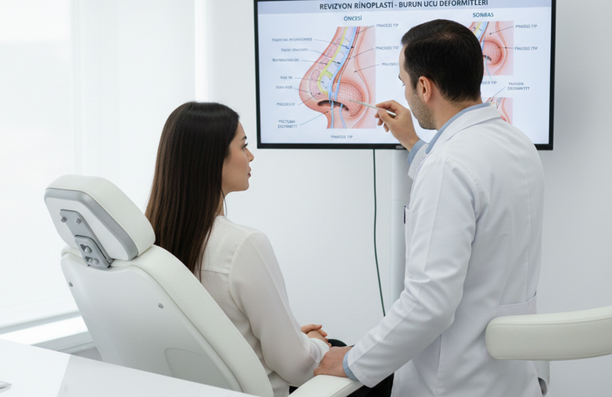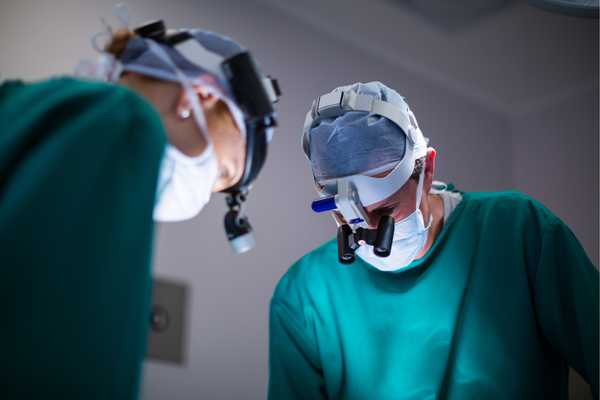

Dr. Hasan Duygulu and his team perform turbinate reduction surgery to reduce the size of the nasal turbinates, allowing you to achieve healthier breathing habits. This way, you can meet your need for healthy breathing at an affordable cost. If you want to gain healthy breathing habits, you can contact Dr. Hasan Duygulu and his team to schedule a preliminary consultation for turbinate hypertrophy treatment.
What is Turbinate Reduction Surgery?
The treatment of swollen turbinates, one of the most common functional nasal problems today, is a medical procedure used to reduce the size of the turbinate structures located inside the nose, which play an important role in regulating the respiratory tract. This procedure plays an active role in alleviating serious respiratory problems such as nasal congestion, sleep apnea, snoring, and chronic sinusitis. In this regard, respiratory problems are alleviated, improving the patient’s quality of life. Thus, the patient obtains a healthier respiratory system.
Since the procedure mentioned above is quite simple and short, patients can resume their social life immediately after the operation. Therefore, individuals with busy work lives can also undergo this operation. However, as with any procedure, patients should rest for a few days after the operation and follow the doctor’s recommendations. This can shorten the recovery process.
Types of Nasal Turbinate Surgery
There are several main types of enlarged nasal turbinate surgery. These types vary depending on the patient’s condition and the size of the turbinate. The aforementioned enlarged turbinate treatment methods consist of 5 categories.
Turbinate Coblation
Turbinate Coblation is a minimally invasive surgical method used to reduce the turbinate (nasal polyp) tissue inside the nose. This procedure relies on radiofrequency energy to gently and carefully reduce the turbinate tissue. During this procedure, tissues are carefully removed at low temperatures to eliminate respiratory problems such as chronic nasal congestion, snoring, sleep apnea, and sinusitis. Compared to traditional surgical techniques, this procedure causes less tissue damage and speeds up the healing process. This allows patients to return home on the same day.
Vivaer Turbinate Reduction
Another method for treating enlarged turbinates, the Vivaer Turbinate Reduction procedure aims to reshape nasal tissue by heating it at a low temperature using a specially designed device. In line with this goal, Vivaer technology gently reduces excess tissue inside the nose, alleviating nasal congestion. The procedure is usually performed under local anesthesia, and patients can return to their normal activities on the same day. Thus, it is less invasive than traditional surgical methods and offers a faster recovery process.
Nasal Turbinate Reduction with Laser
Laser turbinate reduction, one of the methods for treating turbinate hypertrophy, is a procedure used to shrink the turbinate (nasal concha) tissue using laser technology. This operation precisely targets the turbinate tissue, vaporizing the excess tissue and widening the nasal airways. Consequently, nasal airflow improves significantly for most patients. Performed under local anesthesia, this procedure offers a rapid recovery process due to its minimally invasive nature and ensures less bleeding or tissue damage compared to traditional surgical methods.
When Should Turbinate Hypertrophy Treatment Be Used?
There are many reasons for performing turbinate (nasal polyp) reduction surgery. The main reasons are functional difficulties and problems. To discuss these conditions in detail:
- Enlarged turbinate treatment may be considered for patients who experience chronic and severe nasal congestion that does not improve with medical treatment. This condition is characterized by constant nasal congestion and negatively affects patients’ daily lives.
- In patients who experience serious sleep problems such as sleep apnea and snoring due to turbinate hypertrophy, this treatment can alleviate these problems by widening the airway.
- Frequent sinus infections and chronic sinusitis may be associated with turbinate hypertrophy. In these cases, turbinate reduction surgery may reduce the risk of infection by improving sinus drainage.
- Surgical intervention may be necessary for patients whose symptoms cannot be controlled with nasal steroid sprays, decongestants, and other medical treatments.
- In patients with turbinate hypertrophy combined with structural problems of the nasal valve, enlarged turbinate treatment can improve the function of the nasal valve and open the airway.
- In patients with structural problems such as nasal septum deviation (crooked nasal septum) along with turbinate hypertrophy, a combination of turbinate reduction and septoplasty can provide a wider and more functional nasal airway.
How is Concha Hypertrophy Surgery Performed?
Preparation
During the examination, the patient’s nasal turbinates are examined in detail.
Anesthesia
General anesthesia is administered so that the patient does not feel any pain.
Incision Procedure
It is usually performed inside the nose. A small incision is made to access the mucosal layer inside the nose.
Shaping
The surgeon first reduces the enlarged nasal turbinates to bring them to an appropriate size.
Final Touches
After the enlarged turbinate treatment surgery is completed, the turbinate surgery is finished by applying small stitches.
What Are the Advantages of Nasal Turbinate Reduction Surgery?
As with all nasal surgery procedures, there are many advantages to treating turbinate hypertrophy. These advantages benefit the individual both mentally and physically. Examining these benefits in detail, we find:
- Improved Respiratory Function: After treatment, the airways in the nose open up and breathing becomes easier. This is a major advantage, especially for patients suffering from chronic nasal congestion.
- Reduced Sleep Problems: In patients experiencing sleep problems such as sleep apnea and snoring due to nasal congestion, sleep quality improves significantly after treatment.
- Better Quality of Life: Reduced difficulty breathing allows for easier performance of daily activities, improving overall quality of life.
- Reduced Risk of Infection: Open airways reduce the risk of nasal and sinus infections (such as sinusitis). This means fewer infections and periods of illness.
- Reduced Headaches: Patients who experience headaches due to nasal congestion and sinus pressure benefit from a reduction in these headaches after treatment.
- Improved Athletic Performance: Easier breathing during sports contributes to increased performance and makes sports activities more comfortable.
What Should Be Considered Before Nasal Turbinate Reduction Surgery?
There are certain key points to consider before undergoing turbinate hypertrophy surgery. These points ensure that the preoperative process goes more smoothly while also maximizing the effectiveness of the procedure. Therefore, it is beneficial to take the following precautions:
- A detailed evaluation should be performed by an ear, nose, and throat (ENT) specialist before turbinate surgery. During this evaluation, your medical history, current health status, and expectations from the surgery are reviewed.
- Blood tests, an EKG, and other medical tests should be performed when necessary. These tests are required to determine whether there are any health issues that could prevent surgery.
- All medications you are taking should be reported to the doctor before surgery. In particular, blood thinners, aspirin, ibuprofen, and similar medications should be discontinued a certain period of time before surgery.
- Care should be taken to consume light and healthy foods before surgery. Therefore, you should stop eating and drinking water at least 8 hours before surgery.
What Should Be Considered After Turbinate Hypertrophy Surgery?
There are some important points to consider after turbinate reduction surgery to speed up the healing process and prevent complications. These points help ensure that turbinate surgeries are successful. These points are as follows:
- Resting for the first few days after surgery is very important. To do this, you should avoid strenuous physical activity and not overexert yourself.
- You should sleep with your head elevated. This can help reduce swelling and bleeding. You can also use two pillows to keep your head elevated.
- You should regularly use the nasal sprays recommended by your doctor. These sprays support healing by keeping the inside of the nose moist.
- If you have to sneeze, you should sneeze with your mouth open. This reduces the pressure inside the nose.
- Be gentle when cleaning the nose area. Therefore, avoid blowing your nose hard or making any movements that strain the inside of the nose.
- Do not take hot showers or baths for the first few days. This is because hot water can increase bleeding.
- During the healing process, protect the nose area from any kind of impact.
Who Are the Best Candidates for Nasal Turbinate Surgery?
If you want to have enlarged turbinate surgery, you must be experiencing functional problems. These conditions cause a person to have nasal turbinate surgery. These conditions are as follows:
- People who experience nasal congestion due to inferior turbinate hypertrophy and are bothered by this condition
- Those who have difficulty breathing due to turbinate hypertrophy, especially those who experience breathing problems during sleep
- Those whose respiratory symptoms cannot be controlled with medication or other conservative methods
- Those who experience aesthetic concerns or a feeling of swelling inside the nose due to turbinate hypertrophy We can say that they are suitable candidates for enlarged turbinate treatment. However, we recommend that you have a preliminary consultation with your surgeon for detailed information.
How to Choose the Best Nasal Turbinate (Turbinate Hypertrophy) Surgeon?
If you are looking for the best surgeon for nasal turbinate surgery, we recommend that you conduct thorough research. This will enable you to achieve positive results in inferior turbinate hypertrophy. To do this, you should ensure that your doctor specializes in the field of aesthetic and reconstructive surgery. You should also make sure that they perform bilateral inferior turbinate coblation on all nose types. This will help you achieve a healthy nasal turbinate structure.
At this point, Hasan Duygulu, one of Turkey’s most renowned turbine reduction surgeons, stands out due to his success in operations and his use of different techniques. Therefore, you can achieve a healthy nasal structure by contacting Hasan Duygulu, one of Turkey’s most renowned nasal tissue (concha swelling) surgeons.
For more information about cosmetic nose surgery, turbinate surgery prices, and achieving a healthy nasal structure, you can visit our rhinoplasty nose surgery page. With Dr. Hasan Duygulu’s experience, you can achieve excellent results from both a functional and aesthetic perspective.
Frequently Asked Questions
I am having nasal turbinate surgery for the first time, so I am anxious. Therefore, is the concha enlargement operation a painful procedure?
It is normal to experience mild pain after nasal turbinate reduction surgery. There is no need to worry about this. This pain can be relieved with painkillers recommended by your doctor.
Why is my nose still blocked after nasal turbinate reduction surgery?
Since tissues are treated during nasal turbinate reduction surgery, temporary swelling may occur in the tissues. This can make breathing difficult after surgery. However, as this is temporary, there is no need to worry.
Will my nasal turbinates grow back after surgery?
In most patients, long-term relief is achieved after the surgery; however, in cases such as allergic or chronic rhinitis, re-growth may be observed over time.
Will my nose look different after a nasal septum reduction surgery?
Since nasal septum reduction surgery is performed inside the nose, no difference is observed on the outside of the nose. Therefore, there will be no change in the appearance of your nose.
What are the risks of undergoing rhinoplasty at a young age?
The biggest risk of undergoing rhinoplasty at a young age is that if bone development is not complete, deformities may occur in the nose in later years. In addition, insufficient psychological maturity can lead to unrealistic expectations. Therefore, a detailed evaluation and communication between the patient and doctor are important before surgery.