Correcting An Over-Projected Nose
The appearance of an overly prominent nose, which many of us have, causes physical and psychological problems for many people today. If you want to learn more about this nose appearance, which greatly affects daily life, you can review this content we have prepared for you. This way, you can learn about the appearance of an overly prominent nose and also get an idea about surgery for excessive nose protrusion.
What Is Over-Projected Nose?
A prominent nose is a condition in which the bone and/or cartilage tissue located on the bridge of the nose protrudes significantly forward compared to the overall proportions of the face. This structure can cause a sharp arch appearance in the nose profile, making the facial expression appear harsher, more masculine, or unbalanced than it actually is. This condition may be genetically predisposed, or it may result from improper healing of bones after nasal trauma, disproportionate development of nasal bones during adolescence, or structural irregularities following previous nose surgeries. The fundamental problem in this type of nose is not just the presence of the bridge; it is the disruption of the balance between the bridge, the tip of the nose, and other anatomical structures of the face. Therefore, evaluation and treatment planning must be based on a comprehensive facial analysis.
What Causes an Excessively Prominent Nose?
A prominent nose is based on a complex anatomical structure rooted in genetic inheritance and is often associated with excessive development of the cartilage skeleton. The most common cause of this condition is the alar cartilages (wing cartilages), which shape the tip of the nose, being larger than normal or having a steeper angle. Additionally, excessive growth of the front and upper part of the nasal septum (anterior septal angle) pushes the tip of the nose forward like a tent pole. On the other hand, in some cases, protruding bone structures at the base of the nose (anterior nasal spine) or the length of the nasal bridge cartilages (medial crus) trigger this excess “projection.” Rarely, childhood trauma stimulating the cartilage growth centers can result in the tip of the nose developing more prominently than the rest of the face during adolescence.
Why Do Some Noses Appear Excessively Protruding?
The appearance of some noses as overly prominent is related not only to the absolute size of the nose but also to an imbalance in the proportions with other anatomical structures on the face. The most common cause of this condition is the structural overlength of the septal cartilage, which acts as a “tent pole,” or the lower lateral cartilages that give volume to the tip of the nose. However, in some cases, even though the nose is actually of normal size, it creates an optical illusion due to the upper jaw (maxilla) being set back or the chin (mentum) being small or set back (micrognathia); this causes the nose to appear much more prominent and larger than it actually is. Additionally, a very deep nasal root (radix) can dramatically emphasize the height of the nasal bridge and the projection of the nasal tip, causing the nose to appear detached from the rest of the face and excessively prominent.
What Is the Role of Cartilage Tissue in Nasal Projection?
The role of cartilage tissue in nasal projection is one of the most critical factors determining the projection of the nasal structure relative to the face and its profile appearance. This factor is directly related to the length, thickness, and positioning of the cartilage structures that shape the nasal tip and midline. In particular, lower lateral cartilages that support the nasal tip being longer than normal or angled more steeply causes the nasal tip to extend further forward from the facial plane. In addition, excessive development of the anterior and upper sections of the septal cartilage (anterior septal angle) pushes the nasal tip forward like a supporting column and creates a protruding profile appearance.
In cases where cartilage tissue is dominant in this manner, even if the nasal bridge bone structure is within normal limits, the nose may appear longer and more prominent than it actually is. Therefore, in assessing nasal prominence, not only the bone structure but also the volume and placement of the cartilage tissue and the integrity of the nasal tip support mechanism must be considered together.
In Whom Is an Excessively Protruding Nose Seen and How Is It Identified?
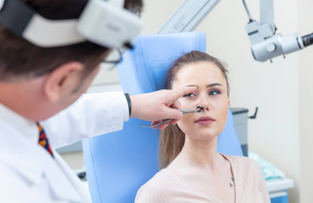
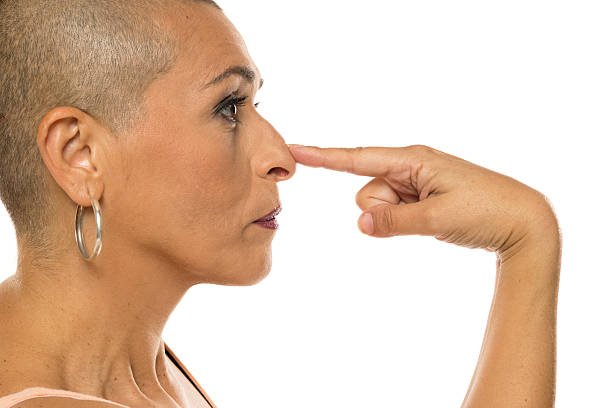
A protruding nose is more common in individuals with a genetic predisposition, and the presence of similar nose profiles in family members is an important indicator supporting this condition. However, in individuals who have suffered a nose injury during childhood or adolescence, the protrusion of the nose may become more pronounced as a result of irregular healing of bone and cartilage structures. Furthermore, in individuals who have previously undergone nose surgery, the uneven shaping or insufficient support of cartilage and bone structures may lead to the emergence of a protruding profile over time. In this context, an excessively protruding nose is identified not only by the presence of a nasal hump but also by the excessive projection of the nasal tip relative to the facial plane, disproportion in the forehead-nose-chin line, and sharp breaks in the nasal profile. Consequently, in clinical evaluation, the lateral profile analysis, comparison of the nasal bridge and nasal tip projection with facial proportions, and, when necessary, the use of photographic or digital analysis methods are employed to comprehensively assess the harmony of the nose with the face.
Common Mistakes in Correcting Excessively Protruding Noses
- Only Lowering the Nasal Bridge (Removing the Hug):This is the most common mistake. If the hump on the nasal bridge is removed but the nasal tip is not pulled back (towards the facial plane), the nose will appear longer in profile and have a “polly beak” appearance.
- Excessively Weakening the Support Structures:Cutting the cartilage more than necessary to pull the nasal tip back will, in the long term, cause the nasal tip support to completely collapse and the nostrils to appear asymmetrical (alar collapse).
- Ignoring the Nasolabial Angle:When de-projecting the nose, if the rotation (upward lift) of the nasal tip is not adjusted correctly, the nasal tip may appear too low or, conversely, excessively upturned, like a “pig’s nose”.
- Failure to Analyze Chin Projection: If the patient’s chin is recessed (micrognathia), the nose will still appear large no matter how much it is reduced. In these cases, intervening only in the nose is a half-hearted solution that fails to achieve profile balance.
- Failure to Manage Excess Mucosa and Soft Tissue: When the cartilage skeleton is reduced, the inner skin and mucosa may remain large relative to this new framework. If this excess tissue is not properly excised, narrowing of the nose and breathing problems will occur.
- Failure to Protect the Ligaments and Soft Tissue of the “Pitanguy”: If the ligaments that stabilize the tip of the nose are unnecessarily damaged, the tip of the nose may droop uncontrollably during the healing period.
- Underestimating the Relationship Between Thin Skin and Hard Cartilage: In a patient with thin skin, simply shortening and smoothing the cartilage skeleton will cause sharp and unnatural cartilage corners to become visible from the outside as the skin heals and shrinks (shrink-wrap).
What Surgical Methods Are Used in the Correction of an Excessively Protruding Nose?
- Shortening and Overlap of the Lower Lateral Cartilages (Alars): The “foot” portions (medial crus) or “side” portions (lateral crus) of the cartilages that shape the tip of the nose are cut at strategic points. These cartilages are overlapped (telescopic method) to bring the tip of the nose closer to the facial plane.
- Shortening of the Anterior Part of the Septum (Septal Trim): The main force pushing the tip of the nose forward is usually the nasal septum. This septum is removed in a controlled manner from the anterior septal angle, shortening the “post” on which the tip of the nose rests and pulling the tip back.
- Tongue-in-Groove Technique:This technique involves suturing the cartilage of the nasal tip onto the septal cartilage in a “riding” manner. This technique is used both to retract an excessively protruding nose and to permanently fix the angle (rotation) of the nasal tip.
- Closed Rhinoplasty Approach: In closed rhinoplasty surgeryIn this method, performed from inside the nose without leaving external scars, the “delivery” technique or cartilage excisions are used to achieve de-projection. In the closed technique, tissue ligaments (Pitanguy ligaments) are preserved more, so the risk of excessive drooping of the nasal tip after healing is lower; however, the surgeon needs a high level of experience to be able to make millimeter-precise shortenings in a narrow space.
- Revision Rhinoplasty Approach: It is used in noses that were left excessively protruding or incorrectly treated in the first surgery. Usually, because the septal cartilage is depleted, rib cartilage is used to create new support. Thus, in revision rhinoplasty surgery, the goal is not only to pull back, but to reconstruct the nose by cleaning the scar tissue.
- Nasal Spine (Nasal Spine) Intervention: Filing down the bony protrusion (nasal spine) where the nose meets the upper lip allows the nose to sit back from the base, reducing its projection.
- Cartilage Overlay: Instead of completely cutting and separating the cartilage, it is shortened by cutting at a specific point and sliding it over each other. This method effectively reduces the distance of the nose forward while preserving the structural resistance of the cartilage.
What Is the Recovery Process Like After Excessively Protruding Nose Surgery?
The recovery process after surgery for an overly prominent noseis generally more controlled and faster, depending on the surgical technique used and, in particular, the preference for closed rhinoplasty. Since all incisions are made inside the nose in the closed technique, there is no visible scar on the outside, and soft tissue trauma is more limited. In this context, swelling, slight bruising, and a feeling of fullness around the nose in the first few days after surgery are normal; however, these symptoms are milder in most patients compared to the open technique. For this reason, a protective splint is worn on the nose for 7–10 days, and at the end of this period, the splint is removed, and the patient can return to their daily social life.
Swelling in the area where the bump on the bridge of the nose was removed may cause the nose profile to appear flatter or stiffer than it is in the first few weeks; this is a natural part of the healing process, and the nose line softens as the swelling subsides. In addition, while it takes 3-6 months for the tip and bridge of the nose to take their final shape, it takes approximately 12 months for the tissues to settle completely and the result to become clear. During this process, following the doctor’s recommended care instructions, protecting the nose area from trauma, and keeping up with follow-up appointments are crucial for both the quality of the aesthetic result and healthy healing.
Things to Consider Before Surgery for an Excessively Protruding Nose
- Detailed Profile Analysis: An excessively prominent nose can sometimes appear “larger than it is” due to a receding chin. Therefore, make sure your surgeon focuses not only on your nose but also on your forehead, lips, and chin projection (profiloplasty).
- Skin Quality Assessment: When the skeleton is reduced (de-projection), the existing skin needs to adapt to this new framework. If your skin is very thick and oily, talk to your doctor about whether you need pre-operative dermatological support to increase the skin’s shrinkage capacity.
- Simulation Study:See how far the tip of the nose will be retracted on digital simulations. Exceeding the “natural limit” in correcting excessively protruding noses can completely change facial expression. Clarify your expectations based on this visual.
- Functional Examination:When the tip of the nose is retracted, the intranasal volume may narrow. Accurate identification of any breathing problems such as sinusitis, deviated septum, or nasal turbinates (concha) before the operation is critical for resolving them in the same session.
- Revision History: If you have previously undergone rhinoplasty and your nose is still protruding, this falls under the category of “Revision Rhinoplasty.” Knowing which cartilage was removed during the initial surgery is vital for the surgeon; they must be prepared for the possibility of using rib cartilage if necessary.
- Medication and Supplement Use: Discontinue blood-thinning medications, herbal teas, supplements such as vitamin E and omega-3 at least 10-14 days before the operation. This minimizes bleeding during surgery and bruising afterward.
- Nicotine and Alcohol Restrictions: Smoking delays the healing of the skin over the reduced nasal skeleton by impairing microcirculation. Quitting smoking at least 2-3 weeks before surgery is essential for tissue health.
- Medication and Supplement Use: Discontinue blood-thinning medications, herbal teas, supplements such as vitamin E and omega-3 at least 10-14 days before the operation. This minimizes bleeding during surgery and bruising afterward.
Things to Consider After Surgery for an Excessively Protruding Nose
- Taping: After de-projection, the nasal tip skeleton is reduced, so the skin may remain loose in this area. Taping, done as shown by your doctor, ensures that the skin adheres tightly to the cartilage framework and prevents the accumulation of scar tissue in the gap.
- Taking a Break from Glasses: When the nasal tip is pulled back, the nasal bridge (dorsum) is usually also restructured. If you have a thin skin structure, the pressure from glasses can cause collapses or asymmetries in this newly shaped bridge. Contact lenses should be preferred over glasses for the first 3-6 months.
- Avoid Heat and Steam:Hot showers, saunas, Turkish baths, or sunbathing dilate blood vessels, increasing swelling at the tip of the nose. In cases where the tip of the nose is retracted, this swelling can lead to a false swelling that makes the nose appear “protruding” again.
- Impact and Trauma Protection:The tip of the nose is more sensitive to impacts in the first few months because the cartilages are shortened and overlapped. An impact before cartilage fusion is complete can cause a disruption in the projection (forward position) of the nose.
- Sleeping Position: Keeping your head above heart level for the first few weeks prevents fluid from pooling in the tip of your nose with the help of gravity. Sleeping on your side can cause asymmetric pressure, especially on stitches; therefore, sleeping on your back is recommended.
- Facial Expression Control and Smiling: In overly prominent noses, the ligaments between the tip of the nose and the upper lip (depressor septi muscle) are often manipulated. In the first few weeks, excessive laughing or hard chewing movements can cause the stitches at the tip of the nose to stretch and the projection to become fixed at an undesirable angle.
Frequently Asked Questions
Does a protruding nose correct itself?
No. Protrusions caused by bone and cartilage on the bridge of the nose do not shrink or disappear on their own over time. On the contrary, once growth is complete, this structure becomes permanent. Therefore, if it causes aesthetic or functional discomfort, the permanent solution is surgical intervention.
Can a protruding nose be corrected without surgery?
Non-surgical methods (such as fillers) can optically balance the bridge of the nose in some mild cases, but they do not eliminate the protrusion. These applications are temporary and do not provide a real correction.
Is it difficult to perform rhinoplasty on a very prominent nose?
The difficulty of the surgery depends on the degree of prominence and the structure of the nose, so it requires technical expertise. This is because the goal is not only to remove the hump but also to reshape the bridge of the nose with a natural line without causing it to collapse.
Does removing the nasal hump make the nose look too small?
No. In proper surgical planning, facial proportions are taken into account when removing the nasal bridge. The goal is not to reduce the size of the nose, but to achieve a profile that is harmonious and balanced with the face. As long as excessive filing is avoided, the nose retains its natural appearance.
Will the nose collapse after rhinoplasty for a prominent nose?
There is a risk of collapse if the appropriate technique is not used. Therefore, it is very important to structurally support the bridge of the nose after rhinoplasty. Experienced surgeons prevent this risk by planning the procedure in a way that preserves the integrity of the bridge of the nose.
Will the nose develop a hump again after surgery?
In surgeries performed with the correct technique, the bridge is not expected to reappear. However, revision may be necessary in cases of trauma, problems during the healing process, or rare bone healing differences. This risk is low.
Will a highly protruding nose correction look natural?
Yes. The goal in modern rhinoplasty is not artificial, flat noses, but personalized results that are in harmony with facial proportions and appear natural. Corrections performed with proper planning and technique result in an appearance that does not reveal the surgery.